18 Beiträge · Ausgabe 14/2025
Editorial
Issue 14/2025
Kein Editorial verfügbar.
Weitere Beiträge
18 Beiträge
Im Fokus
From Reading to Love
I remember clearly the first page of the first lecture series by Rudolf Steiner that I ever read. I was astonished. Steiner writes what an imaginary ancient oriental sage, in contemplating modern Western civilization, would say: “You are living entirely in fear; your whole mood of soul is governed by fear. All that you do, as well as all that you feel, is saturated with fear and its reverberations in the most important moments of life. And since fear is…
Louis Defèche · 14. März
Steiner as
Shattering All Stereotypes
Was Rudolf Steiner an Aristotelian or somehow, at least in some respects, a Platonist? These questions have evoked much controversy over the last 100 years. Such questions naturally concern not only Rudolf Steiner, but anthroposophy in general. Was anthroposophy born Aristotelian in order to integrate the Platonic into itself at some point? Indeed, what if Rudolf Steiner was neither a Platonist nor an Aristotelian but, quite simply, a Socratic? I immediately hear the concerns this question raises: should we introduce…
Salvatore Lavecchia · 14. März

Essay
The Riddle of the ‘I’
Many years ago, I read the following: “The ‘I’ receives its being and meaning from that with which it is connected.” It was like a bolt of lightning; I sat up at full attention. My previous understanding of the ‘I’ was totally shaken and set in motion. I realized that I’d always thought of the ‘I’ as beginning in a center. The ‘I’ as a center—and from out of this center, we direct our view to the world; from out…
Christiane Haid · 14. März

Essay
What Is Feeling?
In The Philosophy of Spiritual Activity, Rudolf Steiner frequently refers to feeling as a soul event. In Chapter 3, he starts by sharply distinguishing feeling from active thinking, which cannot be observed while it is occurring. He says that feeling is observable, along with certain other soul activities (having thoughts or mental pictures, wishes, and cravings). Again, in contrast to active thinking, which is universal, feeling is attributed to the individual personality. Active thinking takes on a personal and individ…
Renatus Ziegler · 14. März

Essay
Everything in the World Is Conscious
Many years ago, I was talking to the wife of a colleague in the stairwell of the Rudolf Steiner House in Stuttgart. Something must have upset me because I was talking very enthusiastically and stuck my right hand out, pointing my finger at the woman listening. As the conversation went on, I became aware of my gesture, which I hadn’t consciously noticed before. The woman I was with had noticed it, and it was clear that I had then noticed…
Anna-Katharina Dehmelt · 14. März

Essay
Christianity as Mystical Fact
In Jesus, the Logos itself has become a person. This book is not the first where Rudolf Steiner “became openly completely esoteric.” He’d already taken this step by writing on Goethe’s “Fairy Tale” in his Maga Would you like to keep reading? We’re pleased to present our Summer 2026 offer, valid until August 8: three months of free access – cancel anytime. If you’re already a subscriber, please log in here to continue reading.
Jaap Sijmons · 14. März
Conversation
Milder Climate
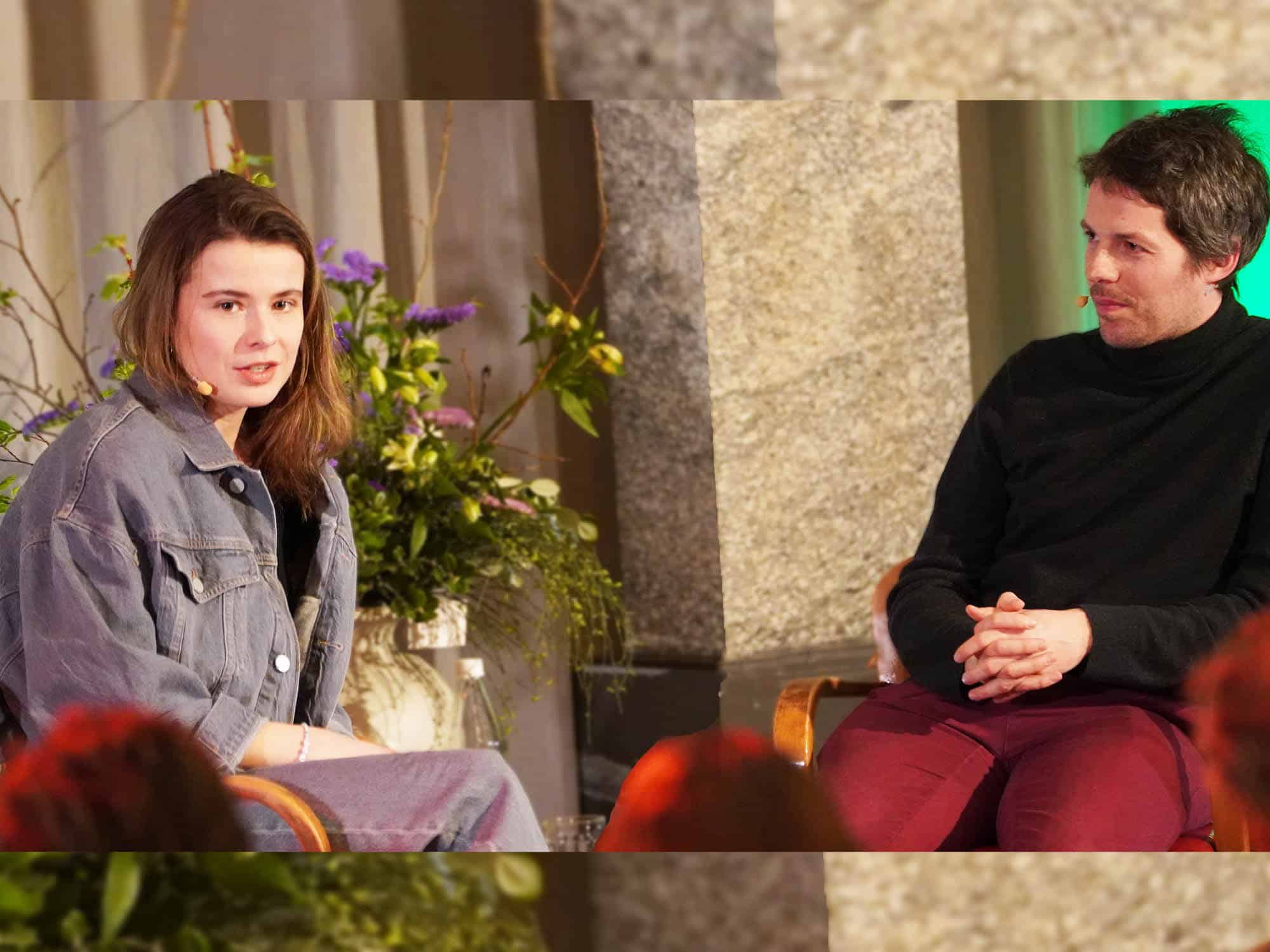
Luisa Neubauer in conversation with Philip Kovce for the “Politics Talks” series at Unternehmen Mitte. Her call: to overcome fossil thinking and live with determination and a willingness to compromise. The Caféhaus Unternehmen Mitte was filled to capacity. Many of the visitors couldn’t see the stage where Philip Kovce and Luisa Neubauer were in conversation. Instead of leaning around a pillar to get a clear view or pushing their way to the front, they used the limitation as an opportunity…
Wolfgang Held · 14. März
Tribute to Rudolf Steiner
A Space of Freedom
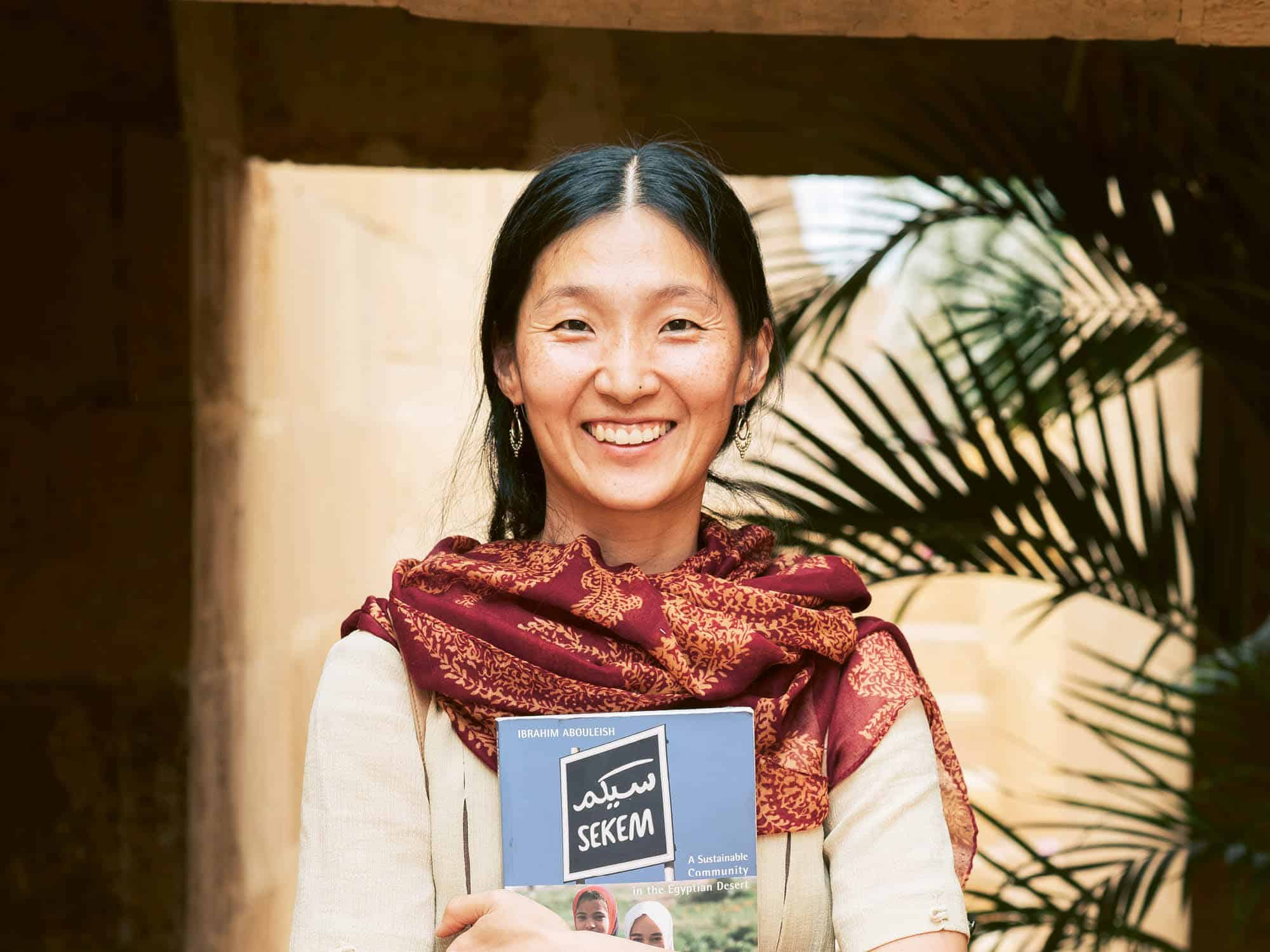
Cairo, Egypt. 2025 is the 100th anniversary of Rudolf Steiner’s death. How does he live on in individual people? Nana Woo, eurythmy therapist and director of the Women’s Health Project in Sekem, Egypt, gives her answers. How can people around you tell that you are interested in Rudolf Steiner? In Egypt, people in my community are not familiar with Rudolf Steiner, and therefore, would not be able to directly comment on my interest in him. However, they may perceive that…
Paula Boslau · 14. März
News
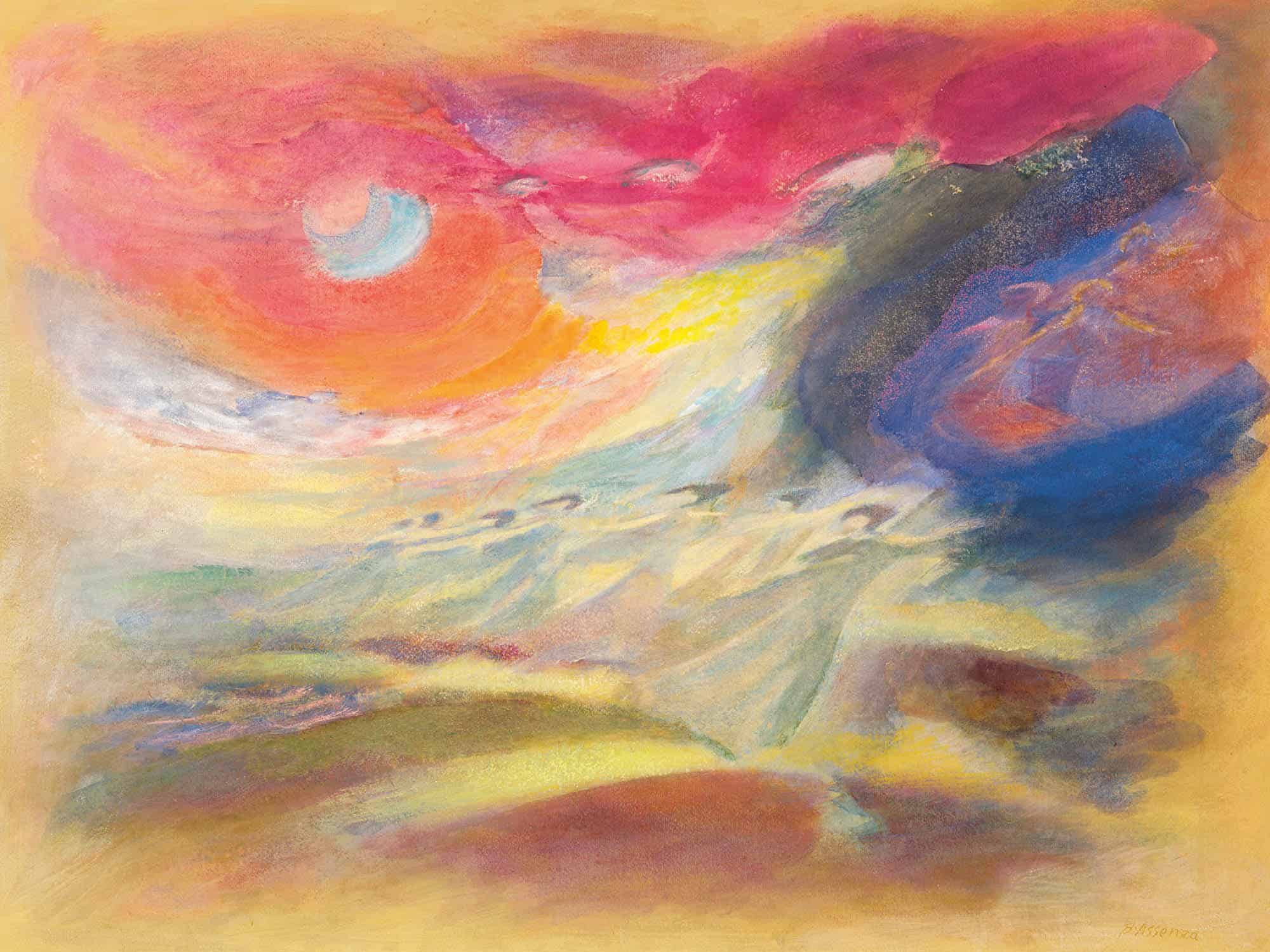
Assenza and His School
Dornach, Switzerland. An exhibition of 50 works by the master and over 50 works by his students. Beppe Assenza is an artist who is well-known and highly regarded in Italy and who received major commissions during his lifetime. In the 1950s, his wife’s serious illness took him to a clinic in Arlesheim; after her death, he chose Dornach as his new home. Here, he began his work as a teacher at a painting school, which, thanks to his skills, attracted…
Clemens Engel · 14. März

Announcements
The Youth House
Chestnut Ridge, USA. A new initiative in New York state. The Threefold Foundation is in the process of building a new program around its youth house for younger people interested in anthroposophy. From September onward, the berry-colored wooden house will be home to three initiatives: a full-time year-long residence for people between the ages of 18 and 35, the Threefold community course as an introduction to anthroposophy for all age groups, and various offerings for the young anthroposophical generation. The…
Paula Boslau · 14. März
News
Art as a Guest
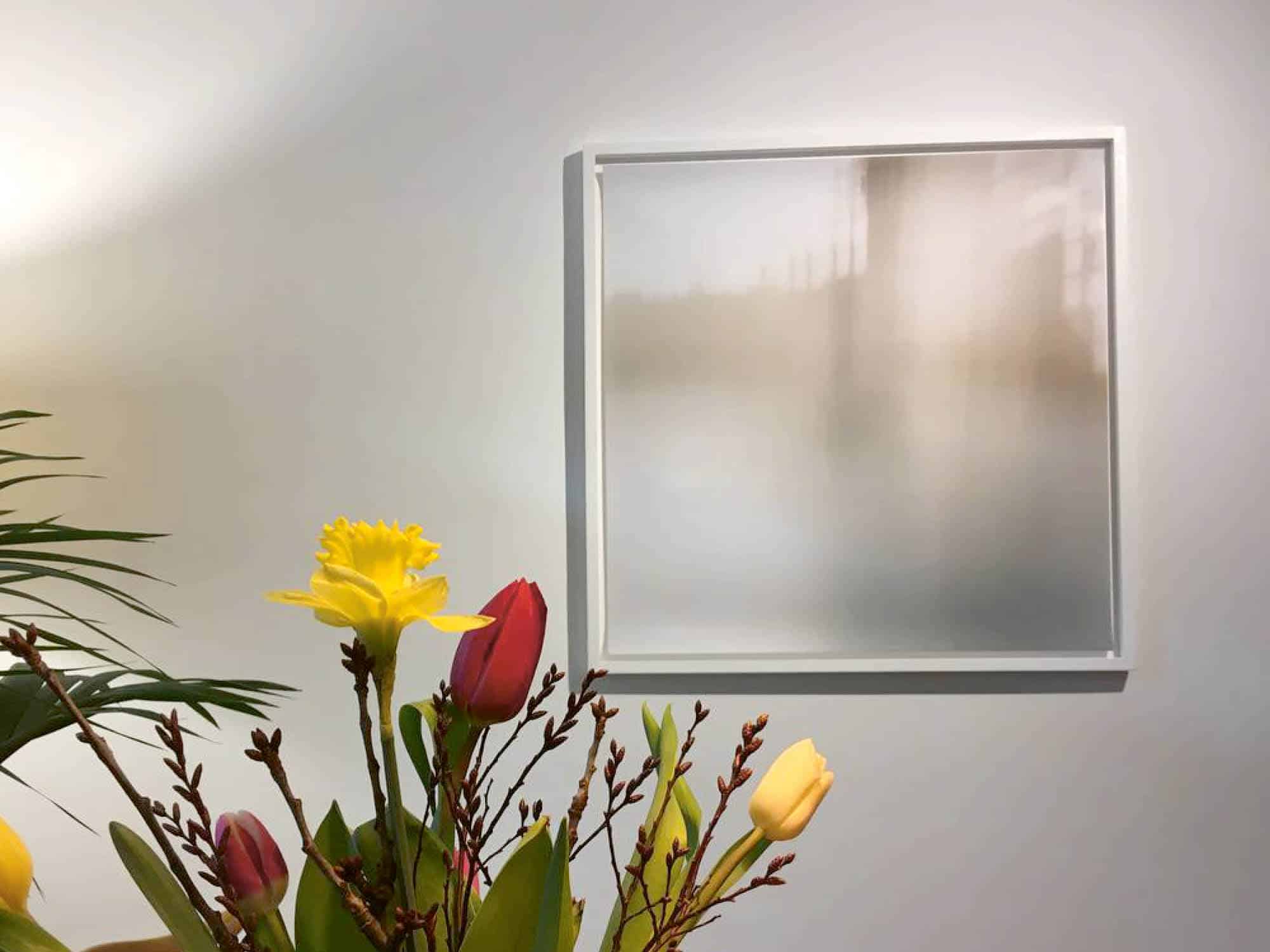
Basel, Switzerland / Witten, Germany. Temporary homes for works of art. We have a picture as a guest in our kitchen. It was made by the artist Philip Stoll, who rents out his works of art—and thus enables interaction between them and everyday living spaces. The picture really is like a guest who greets me in the morning with my first cup of tea, touches me lightly, then questions my own peace and space a little more brashly in the…
Johanna Lamprecht · 14. März
Column
Living Anthroposophy
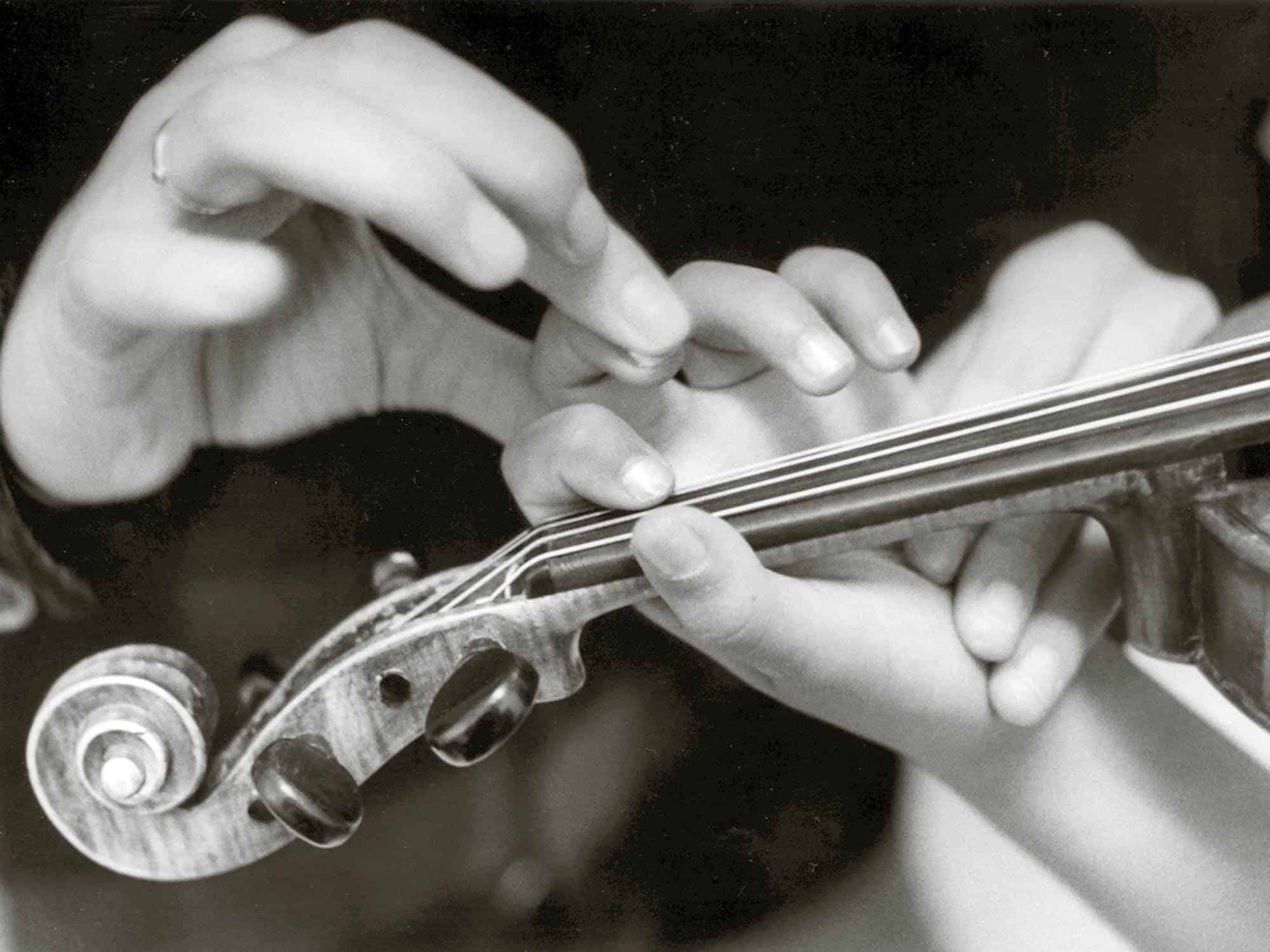
As a musician, I am touched by Steiner’s statement that what is musical is genuinely anthroposophical: the musical, experienced consciously, is experienced anthroposophically. The “musical” means the essence of music, in contrast to the materialistic nature of our times. If musical content is forced too rigidly into earthly, materialistic conditions, it loses its essence. Conversely, singing or making music means that the musical is embodied in a sound form: it needs an earthly body in order to be experienced in…
Johanna Lamprecht · 02. Apr.
Essay
Venturing into Musical Installations
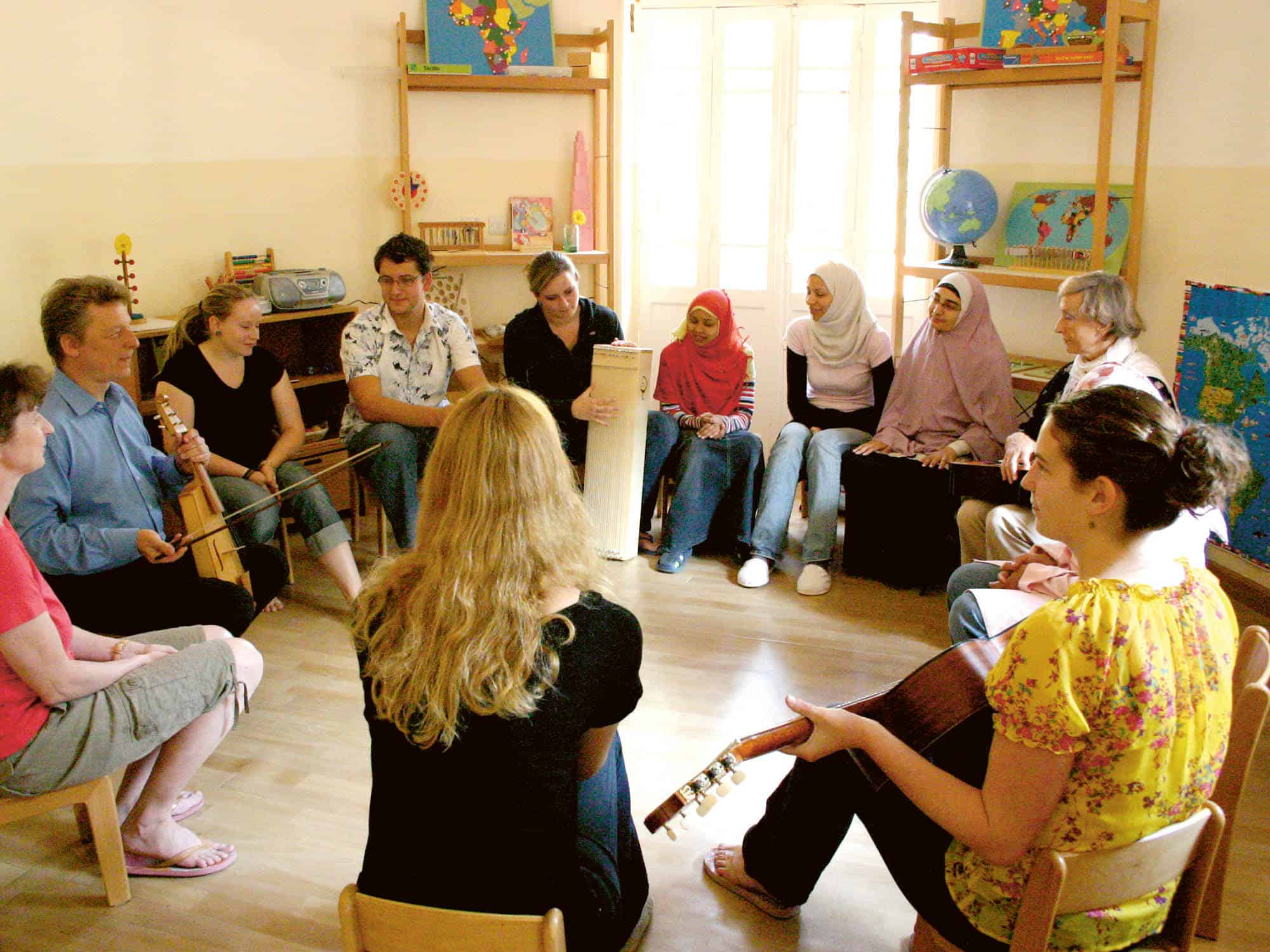
Rudolf Geigenfeind is looking for new approaches to social issues. His instrument is music. He’s using the elements of music to help in group processes: participants themselves become the resonant instruments for events in their surroundings. The setting is a continuing education course for teachers on how to use musical elements to harmonize everyday working life. At the first meeting, eighteen women of all ages sit in a circle. Some arrive out of breath and take off their shoes, while…
Rudolf Geigenfeind · 02. Apr.
Conversation
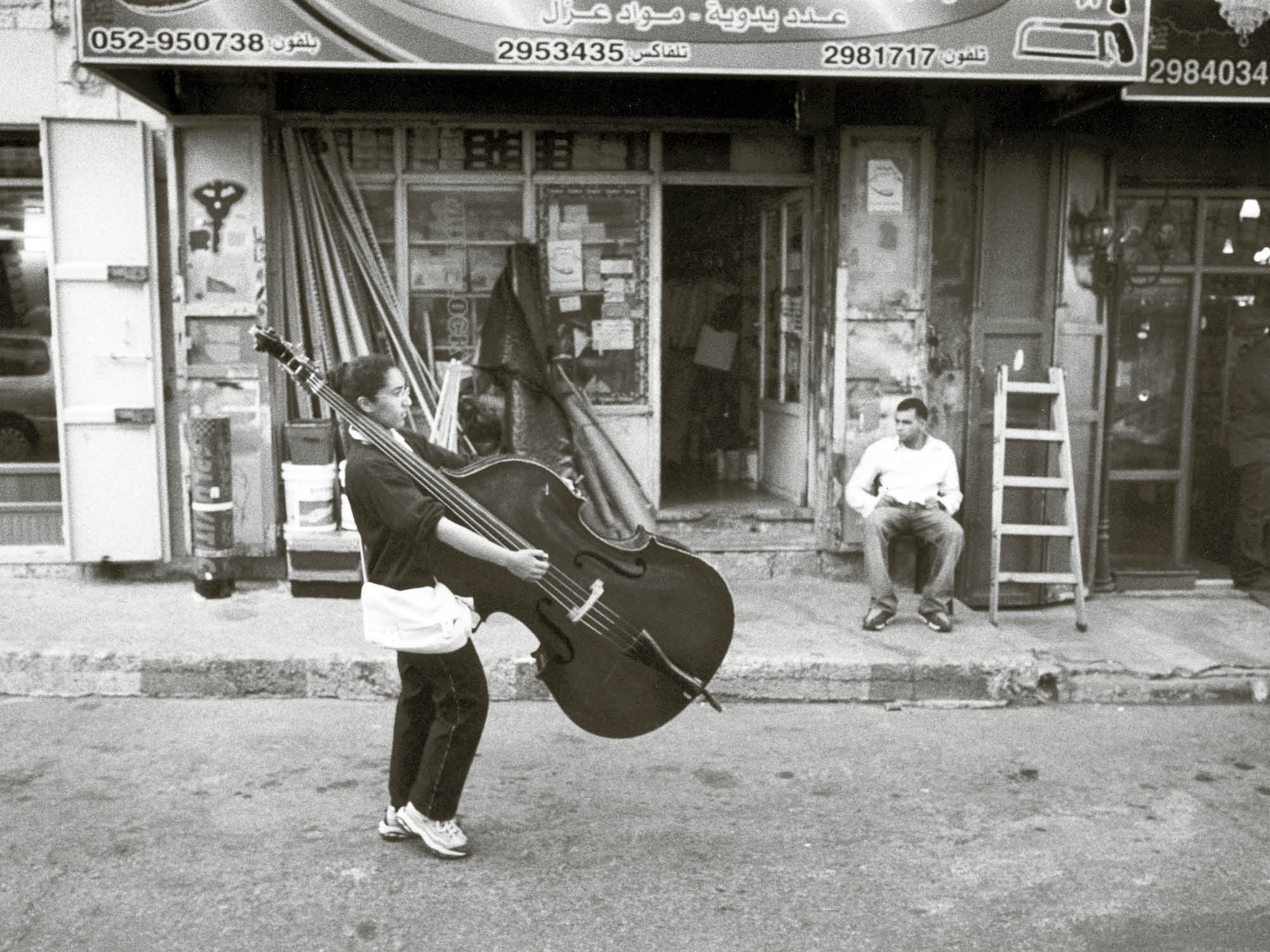
The Show Must Go Off
Enno Schmidt talks with conductor Anna-Sophie Brüning about the love of music, leadership, the feeling of flying a jumbo jet, the void in theater, and the dive into life. Enno Schmidt: Why the love of music? How did you get here? Anna-Sophie Brüning: My parents and my grandfather were musicians. Music was always around me. Of course, I wanted to learn, too, so at the age of three, I started a very intensive practice of the violin and later, the…
Anna-Sophie Brüning · 02. Apr.
Reflection
In Line at the Government Office
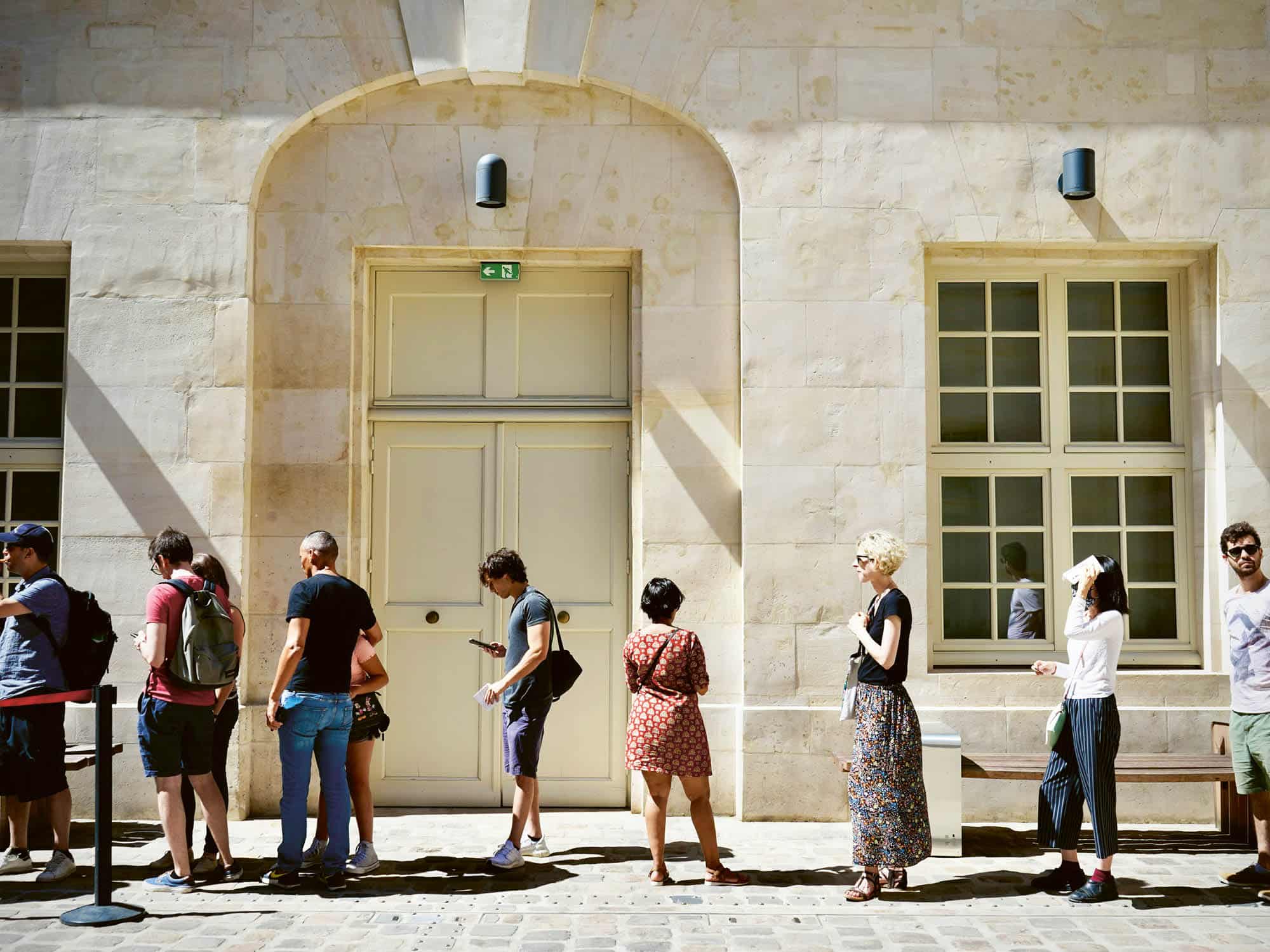
Does today’s life in the rights sphere begin when I take care of equality myself, i.e., when I don’t just leave it up to the authorities? A small field study at the local government office. I had to show up in person between 8 and 10 a.m., without an appointment, to apply for my new passport, or I wouldn’t be able to go on vacation. So I prudently arrived at 7:15 a.m. in the waiting area of the Weimar Citizens’…
Gilda Bartel · 02. Apr.
Tribute to Rudolf Steiner
To Touch God’s Face
Philmont, New York. 2025 is the 100th anniversary of Rudolf Steiner’s death. How does he live on in specific individuals? Laura Summer, US artist and co-founder of the educational initiative Free Columbia, gives her answers. Which sentence of Rudolf Steiner has particularly touched you and why? “To live in reality, filled with the content of thought, is at the same time to live in God”. (Rudolf Steiner, The Philosophy of Freedom) How is it to live in God? Can I…
Paula Boslau · 02. Apr.

News
Developing Waldorf Culture
Ashburton, United Kingdom. The English-language online course “every child!” is dedicated to the deepening and development of Waldorf culture around inclusion and special needs education. It came to an end in March. A retrospective. March 17th saw the 22nd and final weekly session of this synchronous international online course, offered by The Modern Teacher and coordinated by Waldorf SEN expert Ann Swain and senior colleagues from India. The every child! seminar has offered support for teachers, therapists, and parents in…
Sven Saar · 02. Apr.

News
The Fairer School Index
Bristol, United Kingdom. A Waldorf school in first place. When parents have the privilege of being able to choose a school for their children, the quality of the institution naturally plays an important role. Ranking lists provide guidance in the selection process, clearly showing what a school has to offer in terms of educational quality. When institutions evaluate the performance of schools, they are usually based on students’ examination results. However, the results of these rankings do not take into…
Paula Boslau · 02. Apr.