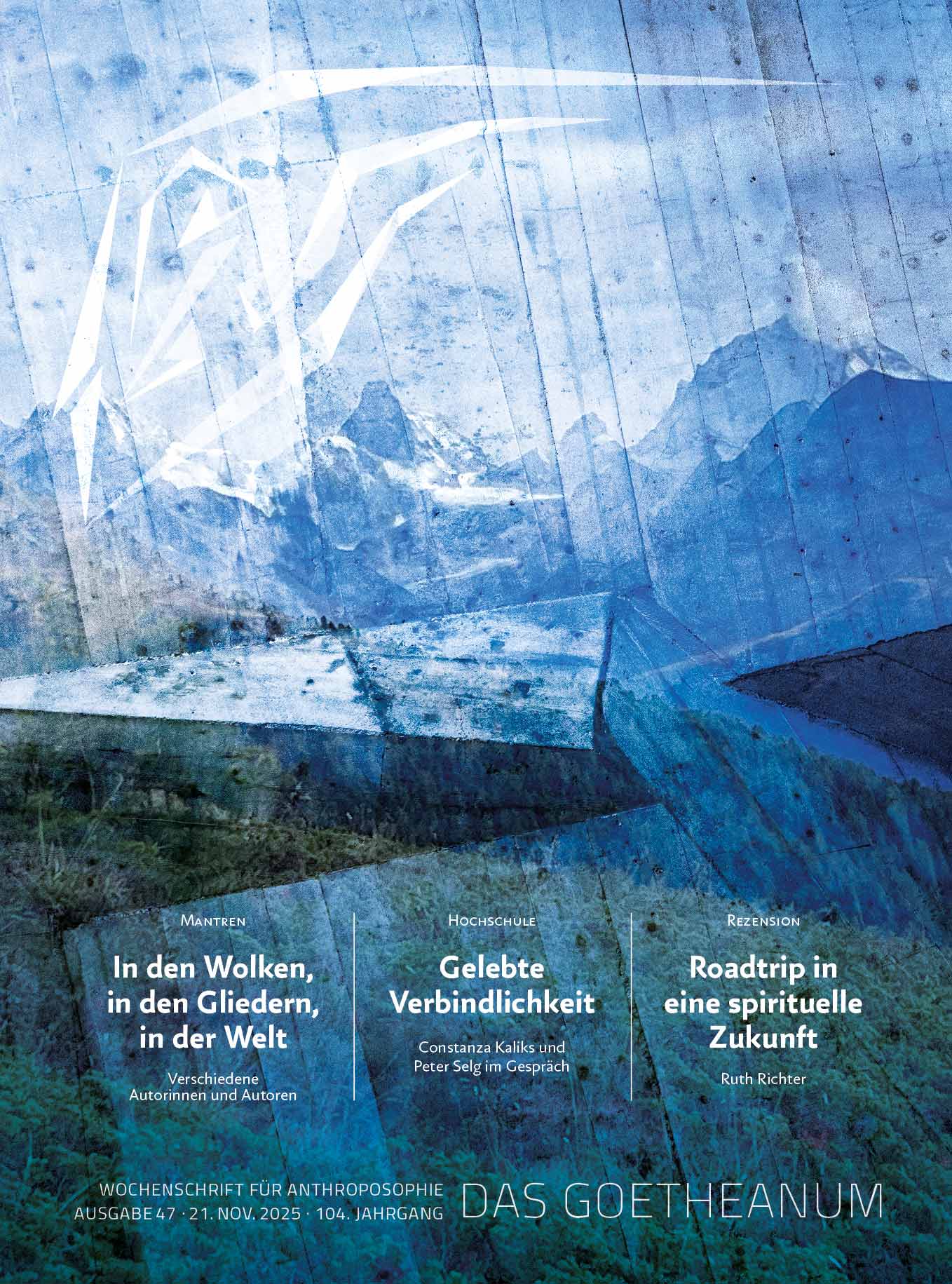
16 Beiträge · Ausgabe 47/2025
Editorial
Issue 47/2025
Kein Editorial verfügbar.
Weitere Beiträge
16 Beiträge
Im Fokus
Learning to Love from Warmth
At a wedding reception, guests were invited to make a wish for the couple. One of the wedding guests surprised everyone with: “My wish is that you both learn to love the whole world—because if you love the world, you also have love for each other.” There were questions as to whether it isn’t the other way around: you love each other and therefore can expand this love until the whole universe finds a place in your heart. The wedding…
Wolfgang Held · 07. Nov.

Reflection
Cyclical Abundance
I have always had a deep love of the word “abundance.” But I am only now beginning to grasp how to actually understand and love it. In my mind, abundance always had to do with “fullness.” From an external perspective, this does not seem wrong: trees full of fruit, flower heads full of busy bees, heavily scented elderflower umbels after a summer rain, the heart full of summer memories. Abundance is a summer word. But what is full today will…
Rahel Meshorer-Harim · 07. Nov.
Retrospective
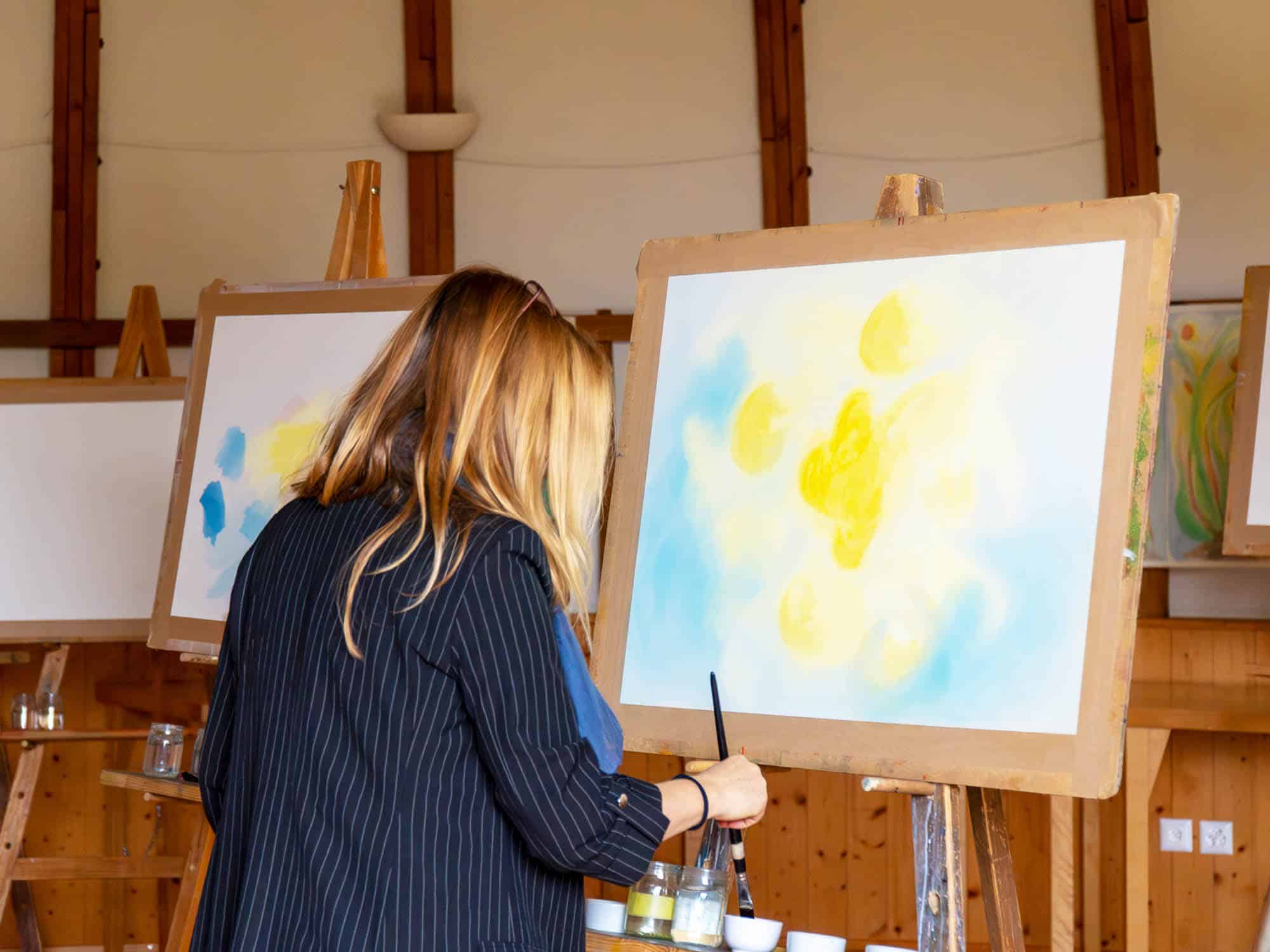
Warmth—Seed of Connection and Transformation
Following the theme of warmth in the lectures at the 2025 Natural Science Section conference at the Goetheanum. The Earth’s Warmth Sheath In his fairy tale “The Little Matchstick Girl,” Hans Christian Andersen describes a poor young girl who tries unsuccessfully to sell matches on a freezing New Year’s Eve. One by one, she burns her matches, and her desire for different kinds of warmth is illuminated: she longs for physical, social, emotional, and spiritual warmth. The different aspects of…
Susanna Kümmell · 07. Nov.
Reflection
The “Warmth Meditation”
The meditation leads us through the elements and bodies to the warmth ether, where the ‘I’ acts in the will, and moral ideals enliven the organism. The meditation offers an opportunity to explore the etheric in Goethean research and to make the good effective as a creative force. Rudolf Steiner gave the “Warmth Meditation” as a personal meditation to the young doctor Helene von Grunelius in the spring of 1923. Later, he gave it to individual doctors and medical students…
Vesna Forštnerič Lesjak · 07. Nov.
Reflection
Warmth Is Balance
In nature and throughout the Earth organism, we find balancing processes expressed in the image and substance of warmth. The physical, soul, and spiritual aspects of human beings also require balancing, but we must maintain this balance ourselves. Warmth is the goal. We are surrounded by warmth. The organism of the Earth, which we’re a part of, has a differentiated, living, and mobile warmth-body that is organized in a similar way to the human organism: a cold nerve-sense pole at…
Vesna Forštnerič Lesjak · 07. Nov.
News
Music as Organism
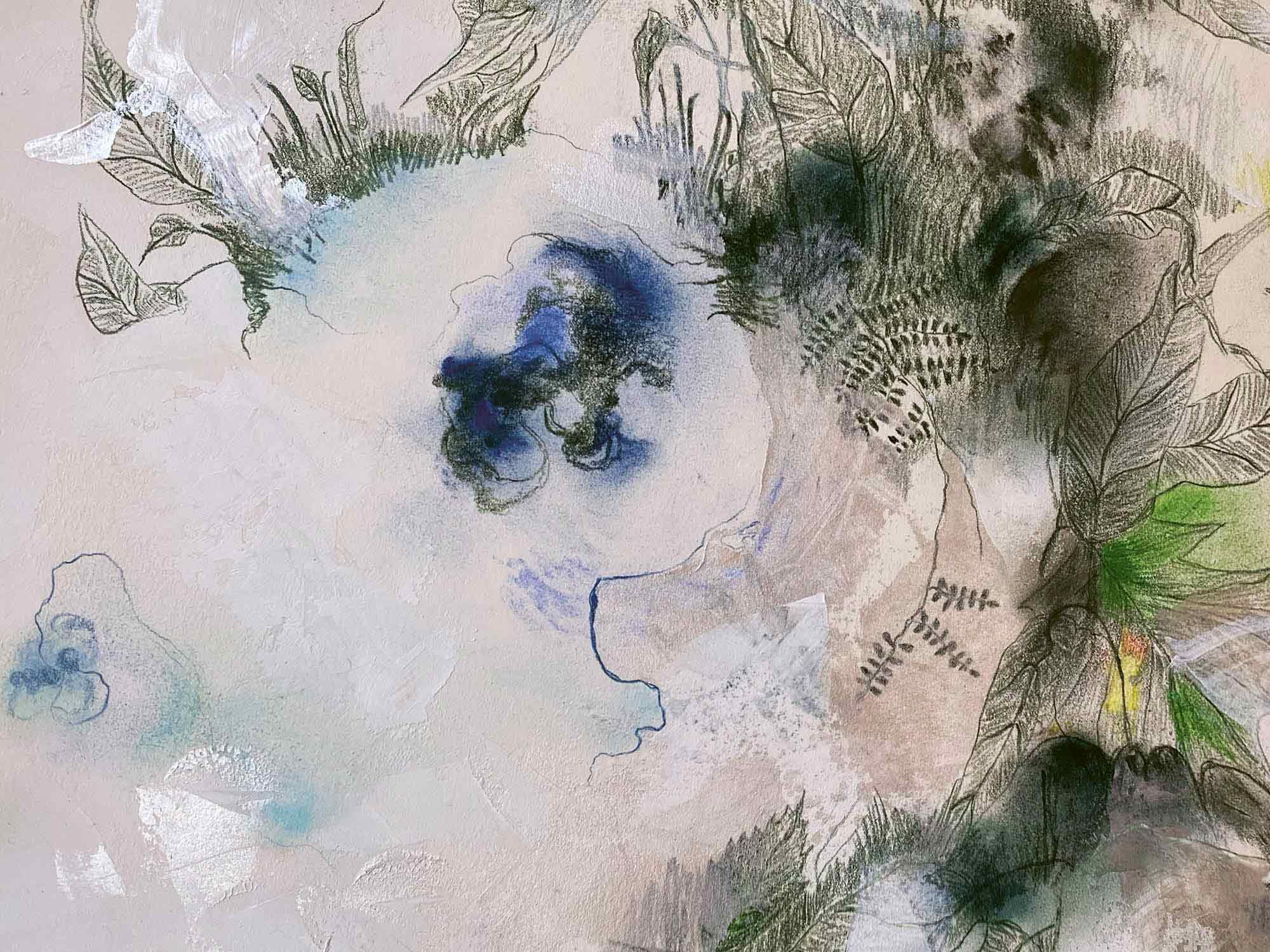
Falkensee, Germany. In his new album Imaginary Ecosystems, Omer Eilam presents a contemporary interpretation of sacred music. An interview. What motivated you to make this album? The idea, which eventually led to the album, originated 10 years ago during my studies at The Institute of Sonology in The Hague. Like many other electronic musicians, I was excited about the possibility of using computer algorithms to govern the “behaviour” that a certain sound exhibits. Based on predefined rules, different parameters of…
Paula Boslau · 07. Nov.
News
Imaginary Ecosystems
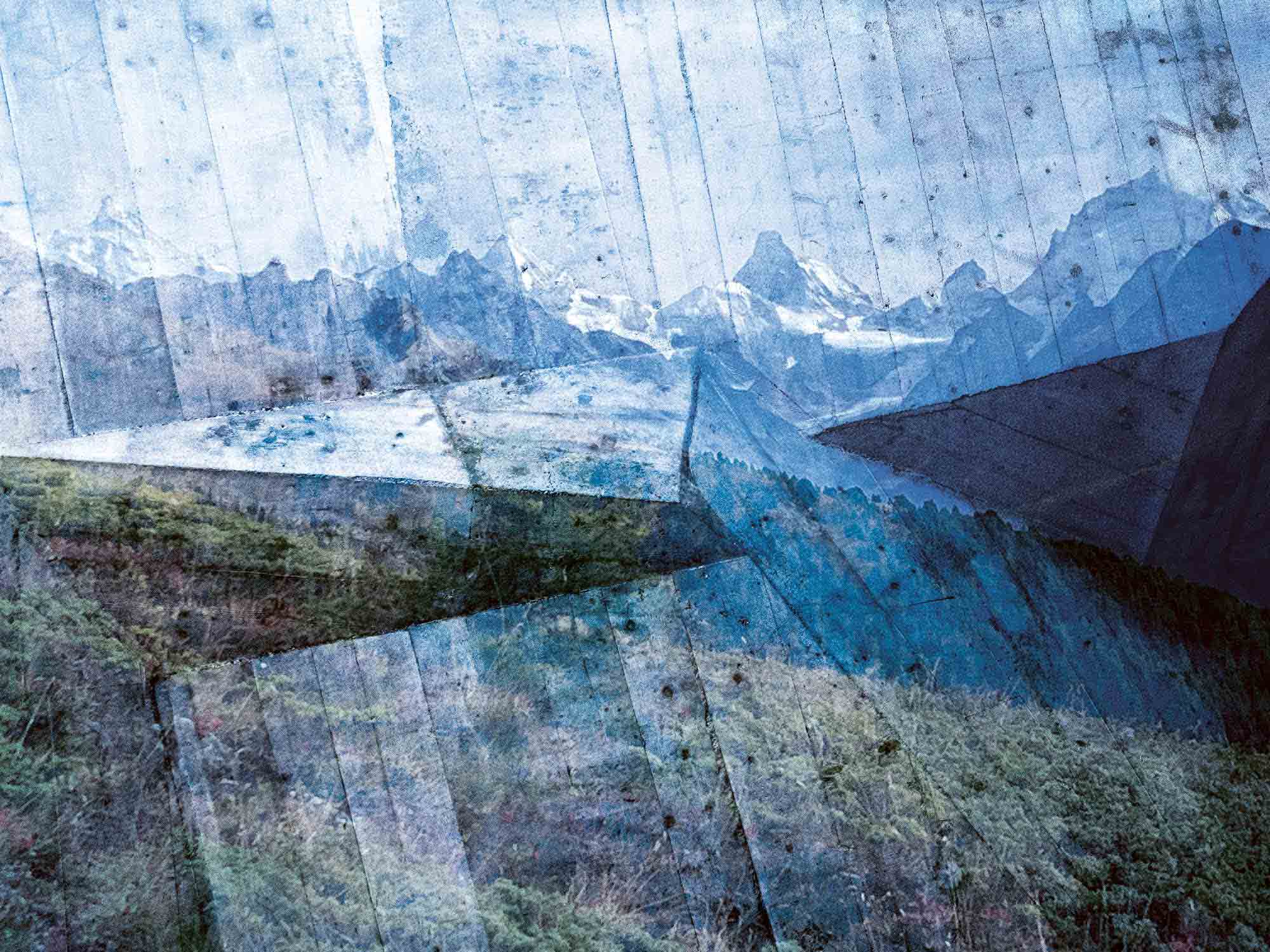
Falkensee, Germany. The album Imaginary Ecosystems comprises three 13-minute tracks—Omar Eilam on their creation and the different qualities they express. The opening piece, “Anthroposophia,” is based on a lecture given by Rudolf Steiner, which guides our imagination to explore realms that exist between our wakeful and our dream consciousness. Passing over to artistic perception, the music conjures up invisible choirs singing a duet with metallic insects and an enormous music box lullabying to a stuttering wind… As its twin sister…
Omer Eilam · 07. Nov.
Column
Resonant Spaces
Anthroposophy is not easily available. It must be realized, individual by individual. Rudolf Steiner did not devote all his energy to providing ready-made and readily accessible content, but rather to creating spaces for what is not so available—spaces of resonance in which an inner word can be heard. The Goetheanum was conceived as an architectural space of resonance. A School of Spiritual Science was founded as a social space of resonance. Verses for meditation were crafted as an inner space…
Louis Defèche · 20. Nov.

General Anthroposophy
The “Red Series”
Regarding a new series of publications by the General Anthroposophical Section. Under the series title “The 19 Class Lessons: Studies on the Foundations of the School of Spiritual Science,” works are published that arise out of engagement with the Lessons of the “First Class,” a path of Schooling which Rudolf Steiner developed for the School of Spiritual Science and its specialist areas (Sections). The book series is issued by the leadership of the General Anthroposophical Section at the Goetheanum; responsibility…
Constanza Kaliks · 20. Nov.

Retrospective
In the Clouds, in the Members, in the World
Among clouds, light, mountain ridges, and a meditative engagement with Rudolf Steiner’s mantric texts, a space of concentration was created for 65 people. Within this space, personal struggles, moments of listening to one another, and artistic gestures coalesced into a shared experience. What happened here was practice at the threshold. The mantra retreat was initiated and organized by members of the Public Secrets ensemble, an initiative that aims to combine meditative culture and public life. When working with spiritual texts,…
Andreas Blaser · 20. Nov.
Reflection
Play and Form
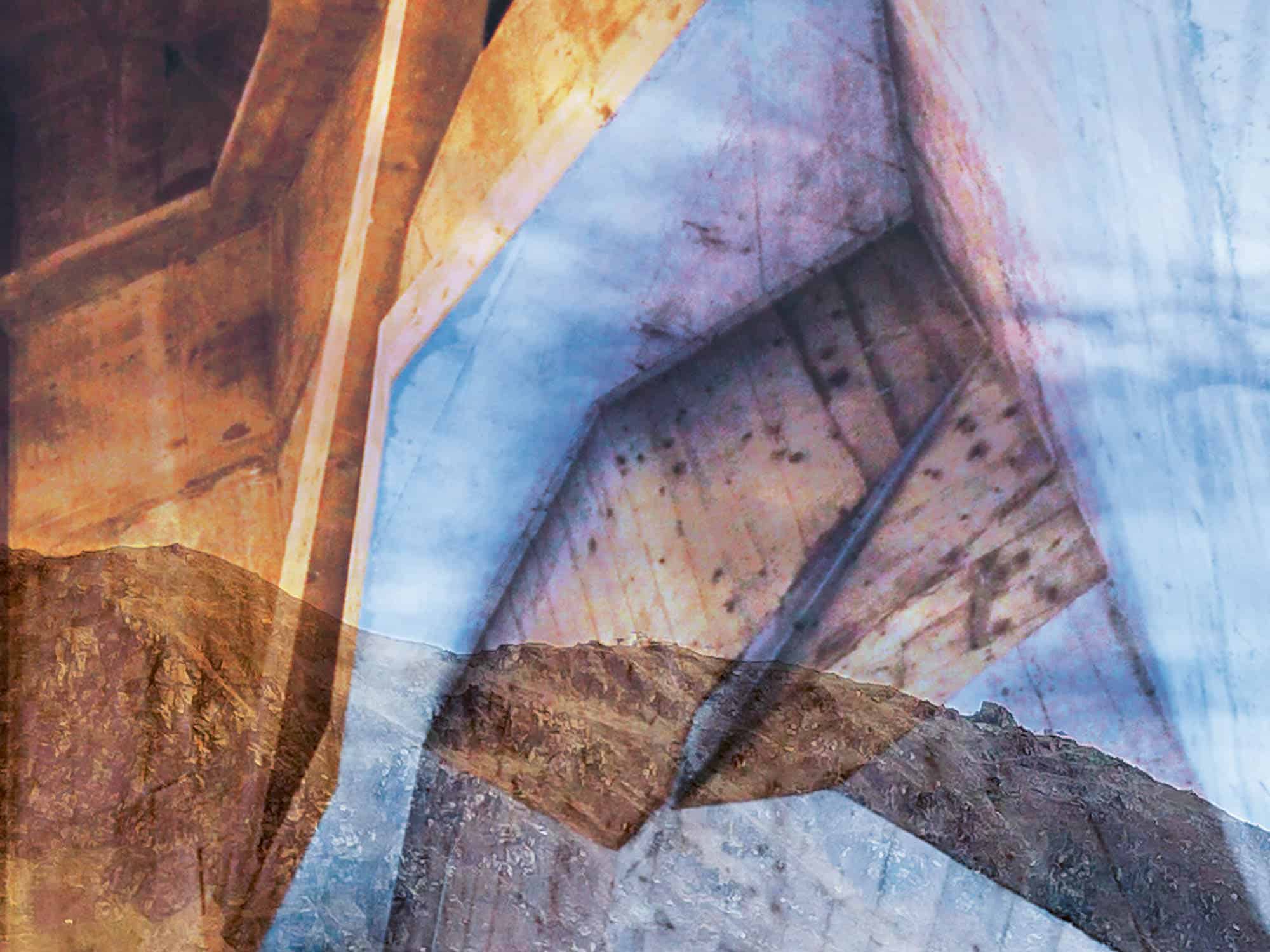
In the west stairwell of the Goetheanum stands a stone figure whose face seems to be speaking both inwardly and outwardly. The sculpture is a focal point during guided tours because it explains without words what Rudolf Steiner wrote in 1924 about the hope of the anthroposophical movement: “to combine genuine, true esotericism with the greatest possible public openness.” This is also reflected in the name of the Public Secrets initiative, founded in 2023 by Elke Schmitter, Christiane Leiste, Maike…
Wolfgang Held · 20. Nov.

Conversation
Lived Commitment
Peter Selg and Constanza Kaliks lead the General Anthroposophical Section at the Goetheanum. Here, they talk about the image and mission of the School for Spiritual Science, about commitment, and the difference between being an enthusiast or a representative for anthroposophy. Questions by Gilda Bartel. In your view, what is the significance of the School for Spiritual Science in these turbulent times? Peter Selg: From the beginning, Rudolf Steiner considered an institute of higher education to be an impulse for research,…
Peter Selg · 20. Nov.
Reflection
Among Gods
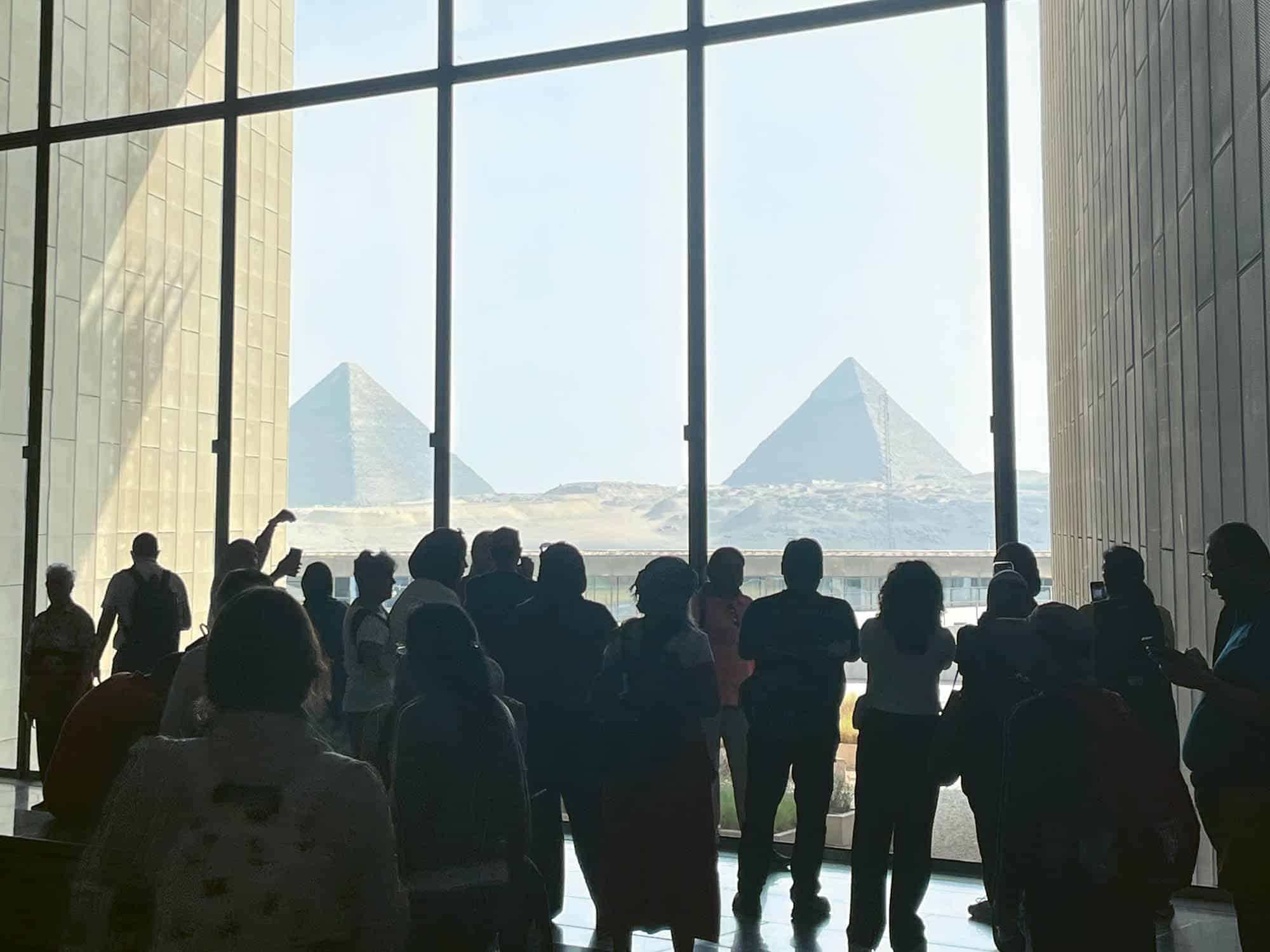
On the opening of the Grand Egyptian Museum in Cairo. Walking across the wide courtyard, you come to an open-ended pyramid in the middle of the pylon-like complex that is the Grand Egyptian Museum (GEM). This is the first design statement of what is now the world’s largest archaeological museum. It is a reversal of ancient Egypt—it doesn’t diminish its grandeur but rather brings it to life. In ancient Egypt, a covered path, like a tunnel, led from the valley…
Wolfgang Held · 20. Nov.
News
Fulfilling Potentials
Yerevan, Armenia. The Mayri Center in Armenia trains teachers in the field of special education. Its work is supported by the Mahle Foundation. At the Mayri Center for Special Education and Social Therapy, teachers learn how to best support children with special needs in their educational journeys. The training concept combines Waldorf pedagogy with artistic work. “Mayri” means cedar in Armenian, a tree that is regarded as a symbol of resilience. Resilience is a key focus at the educational center.…
Redaktion · 20. Nov.
News
Fresh From the Oven
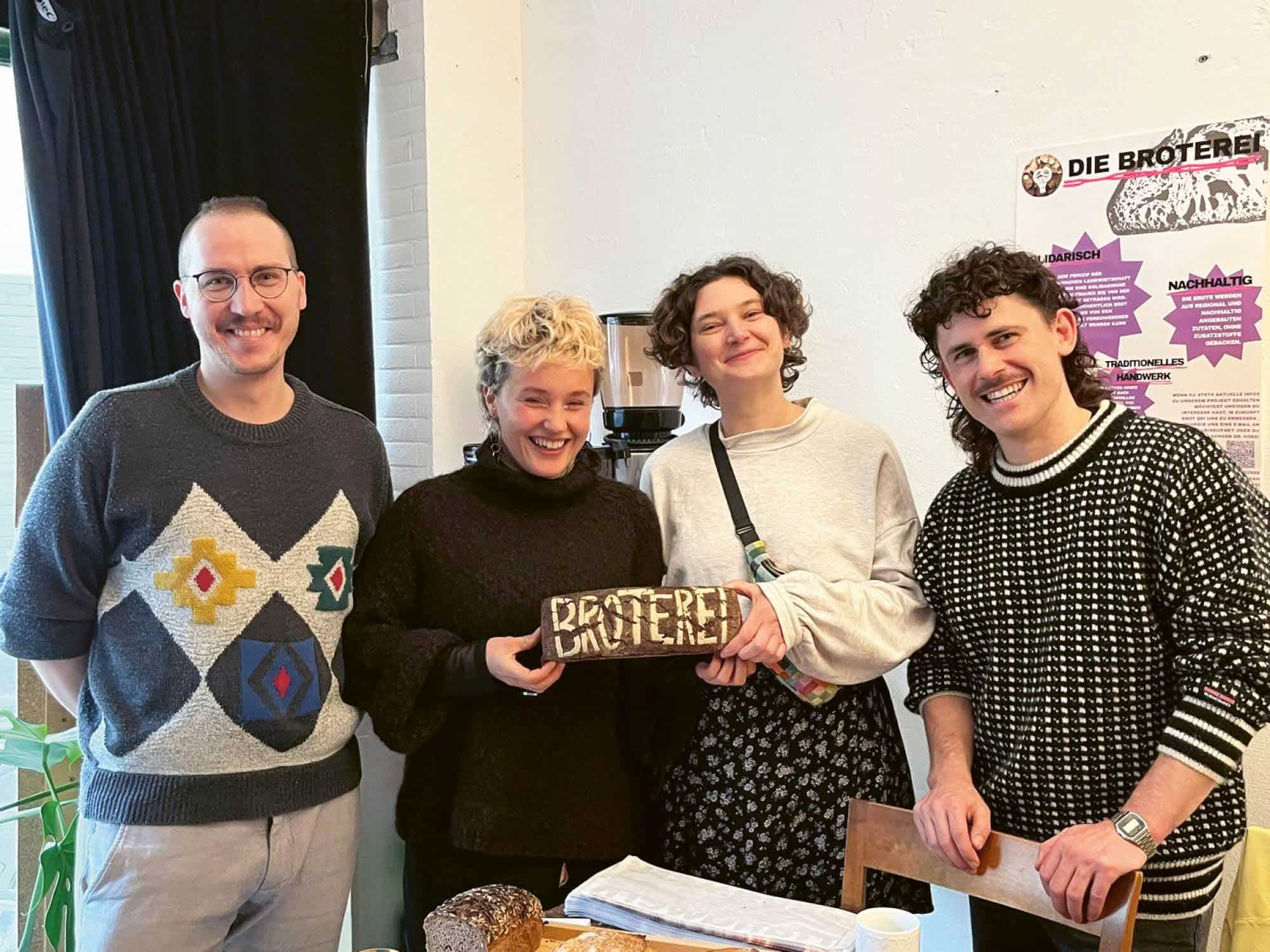
Bonn/Alfter, Germany. The “Broterei” in Bonn is the bakery equivalent of Community-Supported Agriculture. Felix, Lia, Sarah, and Marvin—a group of young adults in the Bonn/Alfter area—bake and distribute fresh bread alongside their jobs or studies at Alanus University. An interview. How does a solidarity-based bakery work? The basic principle of our solidarity-based bakery follows the structure of community-supported economics. Producers, bakers, and consumers form a community. The people who receive the bread finance the ongoing costs of the bakery with…
Paula Boslau · 20. Nov.

Event
Consuming Biodynamics
Darmstadt, Germany. How can biodynamic products be made more accessible? On December 11, the final online meeting of this year, organized by the Biodynamic Federation Demeter International for people working in biodynamic agriculture, will take place. The topic of the meeting is local market development. Although biodynamic products are cultivated in many countries, they are primarily consumed in Central Europe. In many production countries, these products are either unknown or inaccessible to the majority of the population. At the meeting…
Redaktion · 20. Nov.