Autor·in

Bodo von Plato
Nach seiner Tätigkeit als Lehrer an einer Steiner-Schule in Paris war er am Aufbau der entwicklungsgeschichtlichen Forschungsstelle am Hardenberg-Institut in Heidelberg beteiligt. Er ist Mitbegründer des Instituts für Ästhetische Praxis in Berlin und arbeitet für eine Kulturstiftung.
Column · EN
Mantric Environment
We are always surrounded—by climate and landscape, culture, tradition, and other people. At first, we simply encounter them; then we seek them out or flee from them; sleep through, recognize, and shape them. We do not necessarily realize—certainly not fully—that we are always part of the environments in which we live. Conversely, we experience the consequences of our existence on our environments only in very limited ways. Our times seem to call for us to become more aware of these…
22 October 2026 · 1 min
Column · EN
The Body as the Home of Intuition
The body is dark. Everything that happens within it is invisible. From the outside, it is visible—and as a human body—it is more multifaceted, unique, rich, and full of language than anything else. Inside, it is completely dark—the night within. But everything that is becomes perceptible only through and in the body. Without the body and its great darkness, there is nothing for me. For as long as I live, without it there is simply nothing. Ever since I came…
14 August 2026 · 2 min
News · EN
Edgar Morin: Thinker of Complexity, Friend of Humanity
Edgar Morin lived a very long life—104 years—and made a tremendous contribution to all humanity. Born Edgar Nahoum in Paris, 1921, he died there on May 29 as Edgar Morin. Paris was where he belonged intellectually, but the whole world was the arena of his intellectual and human endeavors, for he was able to think and to think complexly. As no one before him, Morin described the rapid growth of human knowledge, the increasingly life-estranging specialization of the sciences, the…
10 June 2026 · 5 min

Column · EN
Seeing People—a Possibility for Resistance
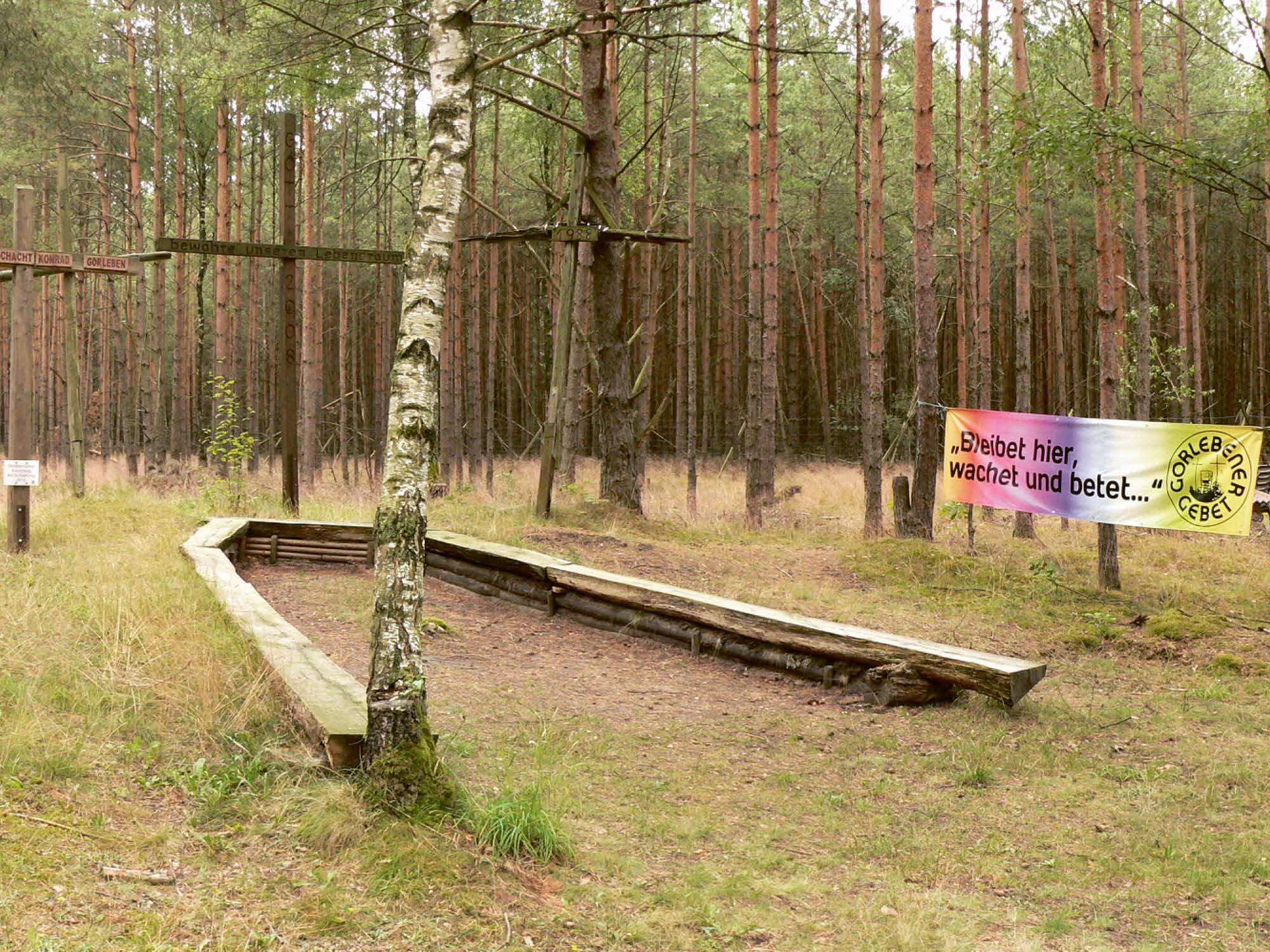
It is a summer Sunday in northern Germany. For decades, people have been practicing and transcending resistance through the Gorleben Gebet [Gorleben prayer.] Gorleben is a small village in the forest near the Elbe River, and since the mid-1970s, it has been the embodiment of resistance against the nuclear industry and its ultimate inhumanity. A young philosopher, with her child on her lap, sits in the middle of the forest, facing the interim storage facility for sealed, highly radioactive material,…
30 October 2025 · 2 min
Essay · EN
Feeling Self-Knowledge: Counteracting the Alienation of Human Beings from the World
Geniuses and people needing support have one thing in common: the unconditionality with which they deal with conditions. For some, the unconditional—the absolute—has such a powerful effect on the conditions of existence, that the conditional becomes transparent to the invisible that shapes and determines the visible. For others, the conditions of existence are so narrow and specific that they need support and accompaniment in order to maintain their existence at all, and—precisely, by way of this special arrangement—they bring forth…
04 July 2024 · 4 min
Philosophy · EN
Archipelagos of the Future
The gap between thought and action has grown wide. The crises in the world arise from this rupture. We know so much, and yet we do not act. Do we need a new theory of science, a new cognitive foundation? Perspectives of an epistemological revolution. It’s obvious that unconscious action can be neither free nor responsible—yet the absence of freedom and responsibility pervades our actions. It’s only slowly coming to awareness that inactive thinking is humane—and the longing for creative,…
25 May 2023 · 20 min
Philosophy · EN
Serious And Cheerful At The Same Time
To be human means to want to become human, to take one’s own future into one’s own hands and that means to want to become free. But how does one become free without losing togetherness? The game shows the direction because in the game you are cheerful and serious. Beauty is the key. It brings together the individual and the general, the I and humanity. Recently I had a dream. A society of people of all horizons and firmaments slowly…
20 January 2022 · 17 min
Meditation · EN
An Ethics of Human Relationships
The most important thing is not whether conflict or communion arises in interpersonal relationships but, rather, whether a real encounter takes place, whether a real relationship develops. Bodo von Plato describes elements of an ethics of relationship through the transformation and redefinition of values and the creation of a new inner place. Like a child who perceives their surroundings and forges a personality in relation to it, humans were and are dependent on their environment to impart ethical values. The…
05 February 2016 · 19 min