Autor·in

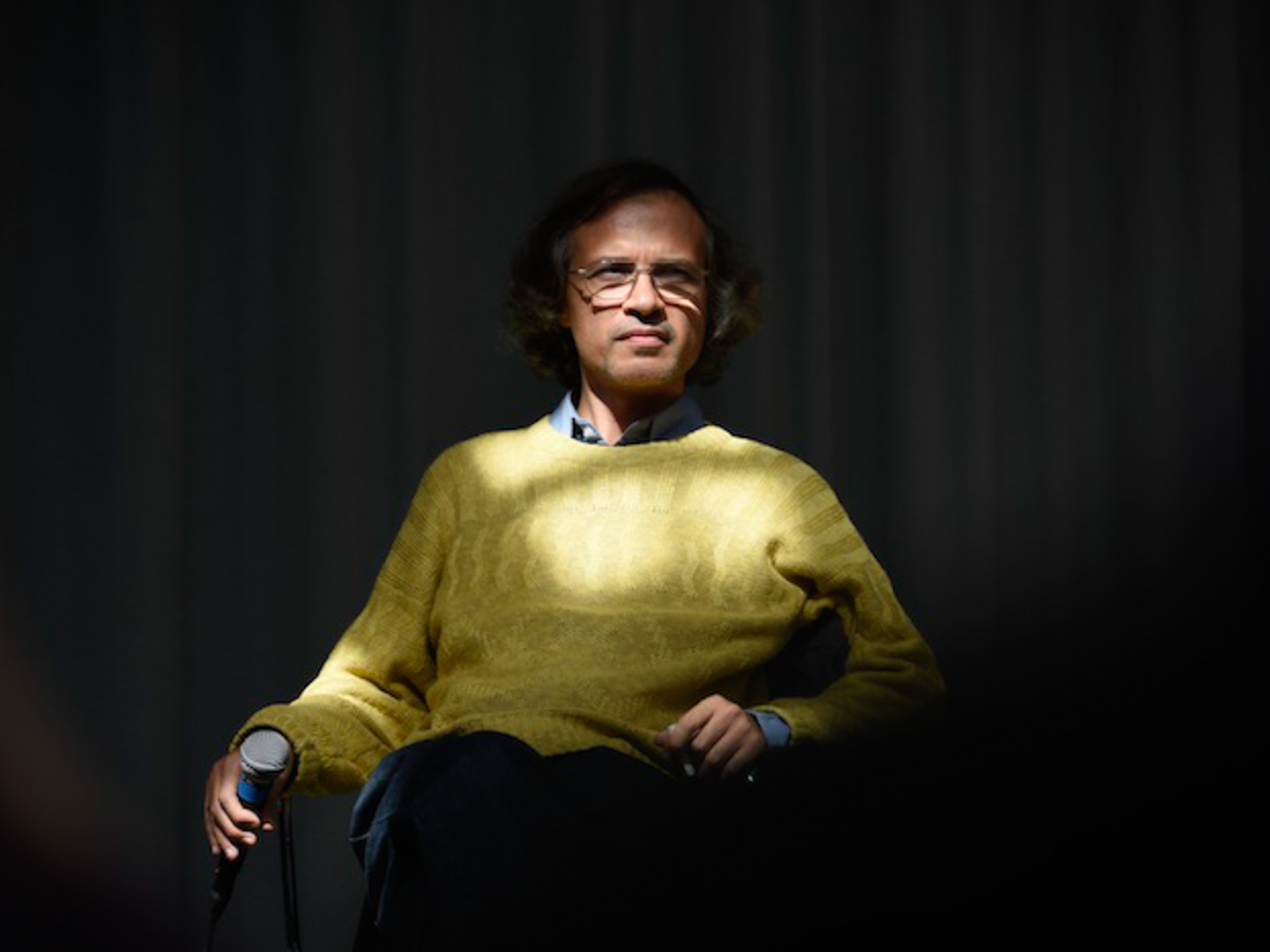
Salvatore Lavecchia
Salvatore Lavecchia schwebt europäisch zwischen Italien und Deutschland. Er ist Professor im Bereich Philosophie und Dozent im Master ‹Meditazione e Neuroscienze› an der Universität von Udine (IT) sowie Dozent im Master ‹Contemplative Studies› an der Universität von Padova (IT).
Essay · EN
From a Fragment, Something New Emerges
In 2020, a fragment of a previously unnoticed text by Rudolf Steiner was published for the first time. It contains important insights into the human ability to perceive the ‘I’ of another. An exemplary volume of the complete works of Rudolf Steiner in German was published containing numerous previously unpublished treatises and fragments, including a short fragment on the difference between human and animal organisms. The original dating of the fragment was between 1903 to 1909, but it is more…
04 July 2025 · 10 min

Steiner as · EN
Shattering All Stereotypes
Was Rudolf Steiner an Aristotelian or somehow, at least in some respects, a Platonist? These questions have evoked much controversy over the last 100 years. Such questions naturally concern not only Rudolf Steiner, but anthroposophy in general. Was anthroposophy born Aristotelian in order to integrate the Platonic into itself at some point? Indeed, what if Rudolf Steiner was neither a Platonist nor an Aristotelian but, quite simply, a Socratic? I immediately hear the concerns this question raises: should we introduce…
14 March 2025 · 4 min
Essay · EN
Europa, or the Drama of the Free Spirit
Europe is experiencing a crisis, economically, politically, culturally, and spiritually. Perhaps the deeper meaning of the concept “Europa” has never before proved as enigmatic as it does today, between the burden of past debts and dreams (nightmares?), alleged newly acquired power, and a longing for cultural greatness. Salvatore Lavecchia Our present is, in a word, an apocalypse, apokálupsis: it wants to unveil, or is an unveiling (the literal meaning of the Greek word) and will reveal something new. This means…
02 August 2024 · 13 min
Essay · EN
I and the True
The truth of the ‘I’ works in the true. The true becomes true in the ‘I’. Would the presence of the true, and with it the truth, be possible if I were not present as an ‘I’ that encounters the true through my own perceiving consciousness? Is it at all possible to think the true if I—a wakeful consciousness that can make itself present, can know itself, in the encounter with the true—if I don’t think together with the true,…
21 June 2024 · 6 min
Consciousness · EN
Symphony of Souls
The perception of a ‹World Soul› – an essence that molds and directs the physical universe into a harmonious organism – has shaped important moments in European intellectual history. In this article, on the basis of Plato and Plotinus – central figures of ancient philosophy and spirituality – some aspects of this perception shall be characterized, which can make the time-honored term ‹World Soul› inspiring for the present time.For a concentrated account on the topic ‹World Soul› in Plato’s work…
10 June 2022 · 10 min

Christology · EN
In the Beginning, There Was … A Harmonious Relationship
A reflection on the Johannine logos The beginning of the prologue of the Gospel of John, translated from Greek, is well known: «In the beginning there was the Word, and the Word was with God» (John 1:1). In the following reflection, I do not want to criticize this common transmission, but to supplement and deepen it with an interpretation of the Greek term ‹lógos›, which points to a dimension of this inexhaustible source of spirituality, as far as I know,…
24 December 2021 · 3 min
Philosophy · EN
Human Locations
A lecture on the future of the self and artificial intelligence was planned for the ‘Long Night of Philosophy’ in Zurich. This big topic is distilled into a little conversation with Salvatore Lavecchia. How does the “I” differ from artificial intelligence? Artificial intelligence is based on processing what is “stored”. What emerges in this way is a derivation from the past, not a real present / future. The I, which experiences itself as spiritual beyond the physical and mental, is,…
02 December 2021 · 1 min
Philosophy · EN
Cosmos: The Future of an Ancient Term
Pythagoras is said to have been the first to call the sky and the universe ‹kósmos›. This suggestion resonates with the image of Pythagoras, which to this day conveys an influential tradition: the image of the initiate who was able to experience the universe as a living assembly of musical harmonies – the harmony of the spheres – and rhythms that can be experienced in numerical terms through supernatural perception.A first accessible introduction to Pythagoras Would you like to keep…
17 September 2020 · 15 min