Rudolf Steiner was a great entrepreneur—an entrepreneur of spiritual life. He did not content himself with disseminating wisdom teachings, but was concretely engaged in many projects.
When his body weakened and he was confined to bed, organizations and projects swarmed around him. Even on his sickbed, he continued to work. He must have experienced the joy of old Faust: “How the clatter of spades delights me!” He was also aware that the essence lies in the creative power within each individual: “I want to ignite every human being / From the spirit of the cosmos, / That they may become a flame / And with the fieryness of their essence / Unfold their being.” (Notebook, 1925) He certainly recognized, in the fate that confined him to bed, the need to withdraw in order to allow others to blossom freely.
His most personal and at the same time most universal undertaking, to which he dedicated his life, was a school for spiritual science: a university that gathered ever larger groups of researchers from all over the world—a global vision. The willpower of the master builder, the entrepreneur of the spirit, even on his sickbed, is what characterizes Rudolf Steiner as a spiritual figure.
Translation Laura Liska
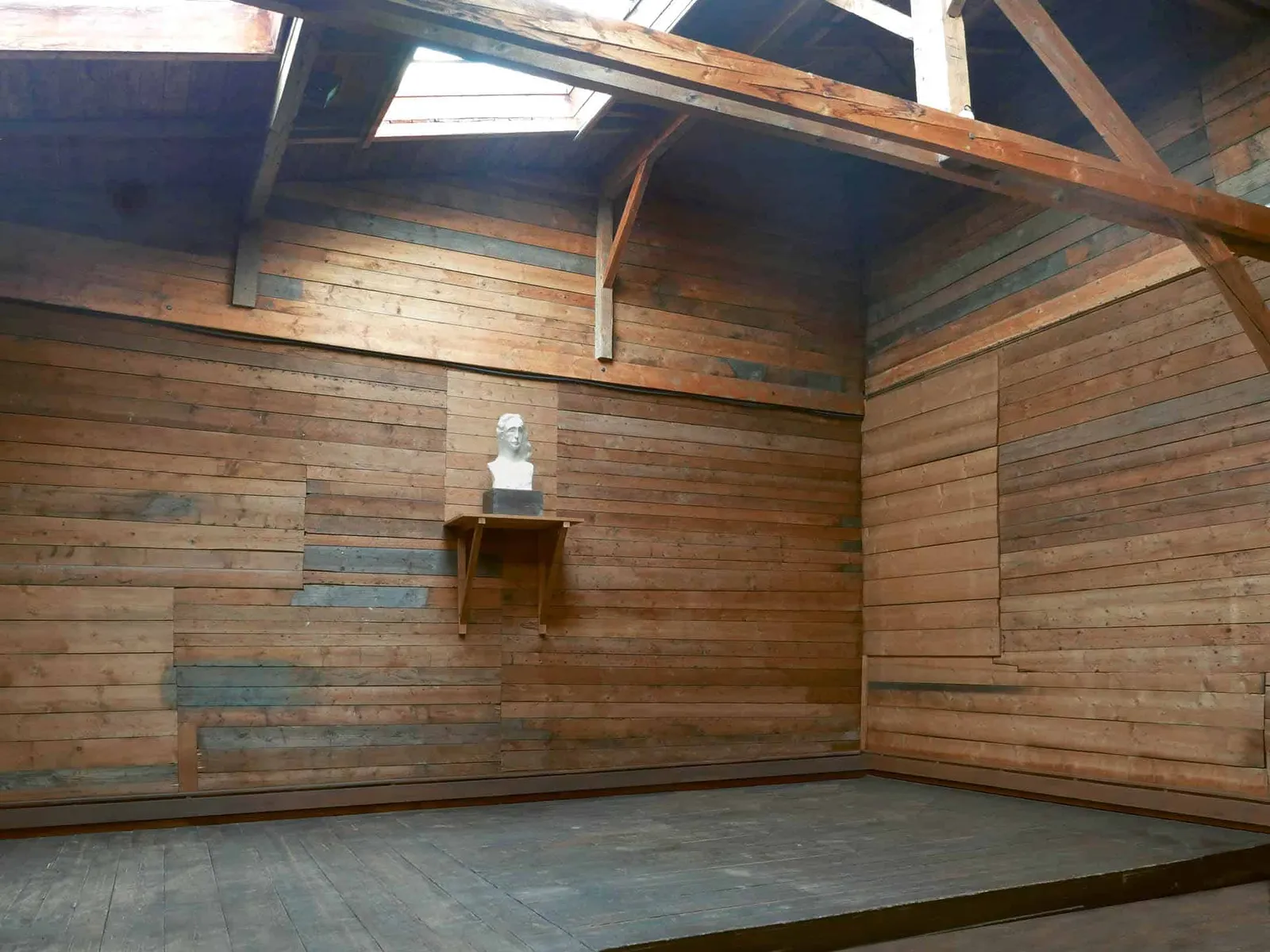
Image Rudolf Steiner’s studio, carpenter’s workshop at the Goetheanum. Photo: Walter Schneider

Louis Defèche hat Psychologie (Nancy) und Sprachgestaltung (Goetheanum) studiert. Nach mehreren Jahren in der Kunstbranche hat sich seine Tätigkeit auf Übersetzung, Redaktion und Projektmanagement verlagert. Seit mehreren Jahren interessiert er sich insbesondere für die Spiritualität in der Moderne, die Beziehung zwischen Mensch und Technik und arbeitet vor allem an der Geschichte, der Idee und dem Schulungsweg der Anthroposophie.