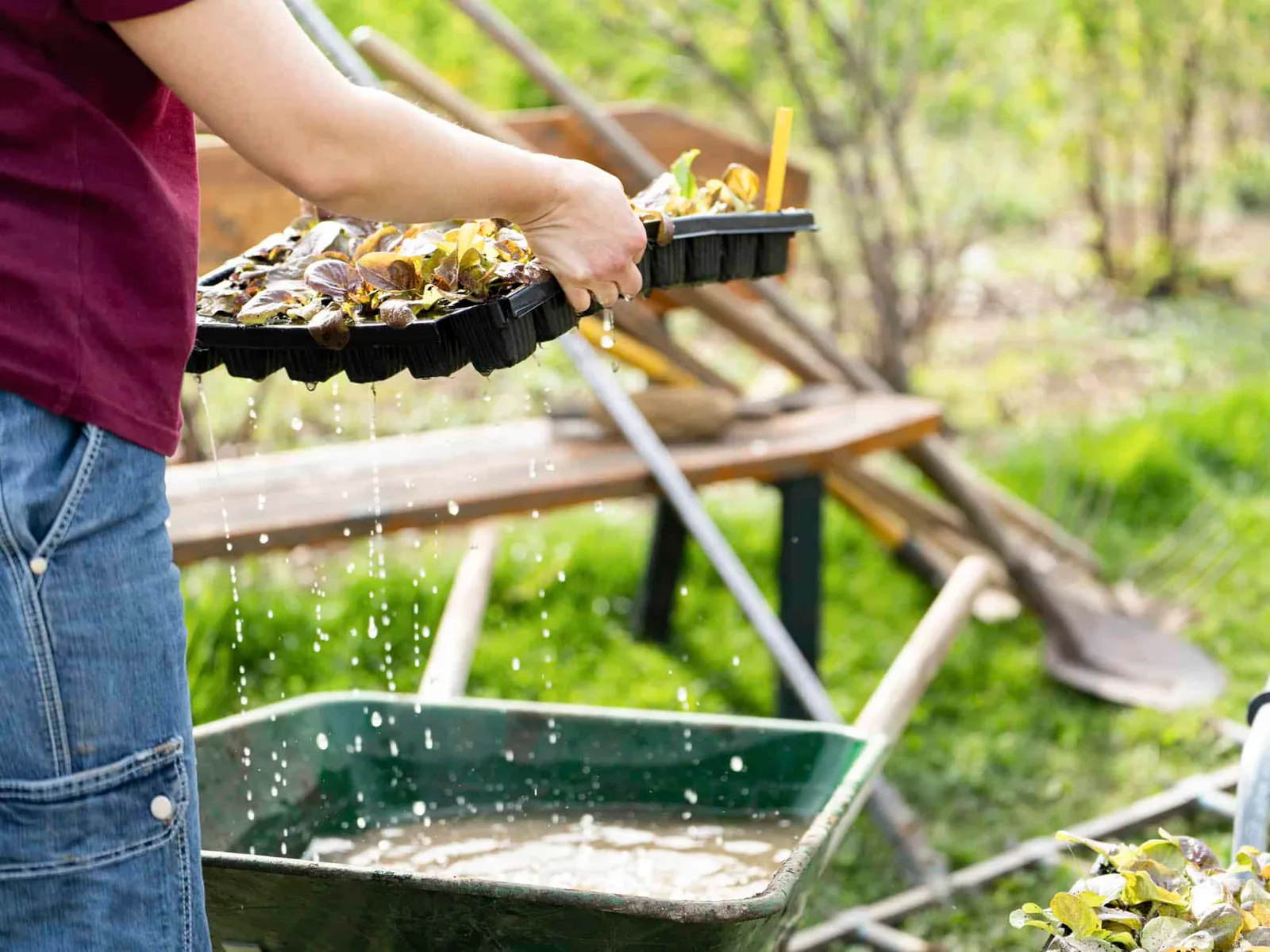
Dear farmers, gardeners, agronomists, and colleagues; dear worldwide friends of crisp lettuce, delicious carrots, and sublime Pinot Noir; dear friends of hedges, songbirds, and earthworms, and of charming fields that you wander over, again and again, on walks after which you suddenly have unexpected ideas about what to do with the soil so that it is harmoniously exposed to the influences of light, warmth, water, air, and earth.
In the Pedagogical Section, we have tried for many years to gather suggestions from university science for the teaching profession. Your conference and the agricultural course gave us the insight: if we imagine the child as lettuce and the young person as Pinot Noir, we can solve all pedagogical problems!
We don’t add any chemical products to the lettuce to promote growth from the outside. Horn manure and horn silica promote the lettuce’s own activity, the activity that creates the good taste. The child, to whom no moral imperatives or scientific definitions are artificially fed from the outside, becomes a Pinot Noir as a teenager, with differentiated depth of feeling, warmth, and Dionysian enthusiasm.
But what is horn manure, horn silica for teachers? Should we bury cow horns in the staff room, stir them in the pedagogical conference, and spray the class thoroughly in the evening or morning? That would be serious and we would have to confront accusations of sectarianism. Or we take the muck we’ve spouted in endless meetings, pack the essence into our horns, er, into our spiritual aspirations, into our love for the sun, and then remain silent in meetings for the entire winter semester. In summer, our mental manure is then diluted again, so that none of our smelly excrement affects the child, just pure silence, pure activity.
In this sense, instead of organizational development, Ways to Quality,1 and other methods, we would only employ biodynamic farmers and gardeners in schools and kindergartens, so that the chatter in meetings stops and real stimulation for self-development takes hold of the children and young people.
Translation Laura Liska
Title image Goetheanum Garden, Photo: Xue Li

Phillipp Reubke arbeitet ab 1989 als Waldorflehrer in Frankreich, später als Waldorfkindergärtner. Er ist Mitglied des Haager Kreis – Internationale Konferenz für Steiner Waldorf Pädagogik. Seit Oktober 2020 leitet er mit Constanza Kaliks die Pädagogische Sektion am Goetheanum.