Section

Literature

← Literary Arts

95 articles

The Riddle of the ‘I’

The Riddle of the ‘I’

Many years ago, I read the following: “The ‘I’ receives its being and meaning from that with which it is connected.” It was like a bolt of lightning; I sat up at full attention. My previous understanding of the ‘I’ was totally shaken and set in motion. I realized that I’d always thought of the ‘I’ as beginning in a center. The ‘I’ as a center—and from out of this center, we direct our view to the world; from out…

Christiane Haid · 14 March 2025 · 7 min
Rudolf Steiner’s Idea Workshop

Rudolf Steiner’s Idea Workshop

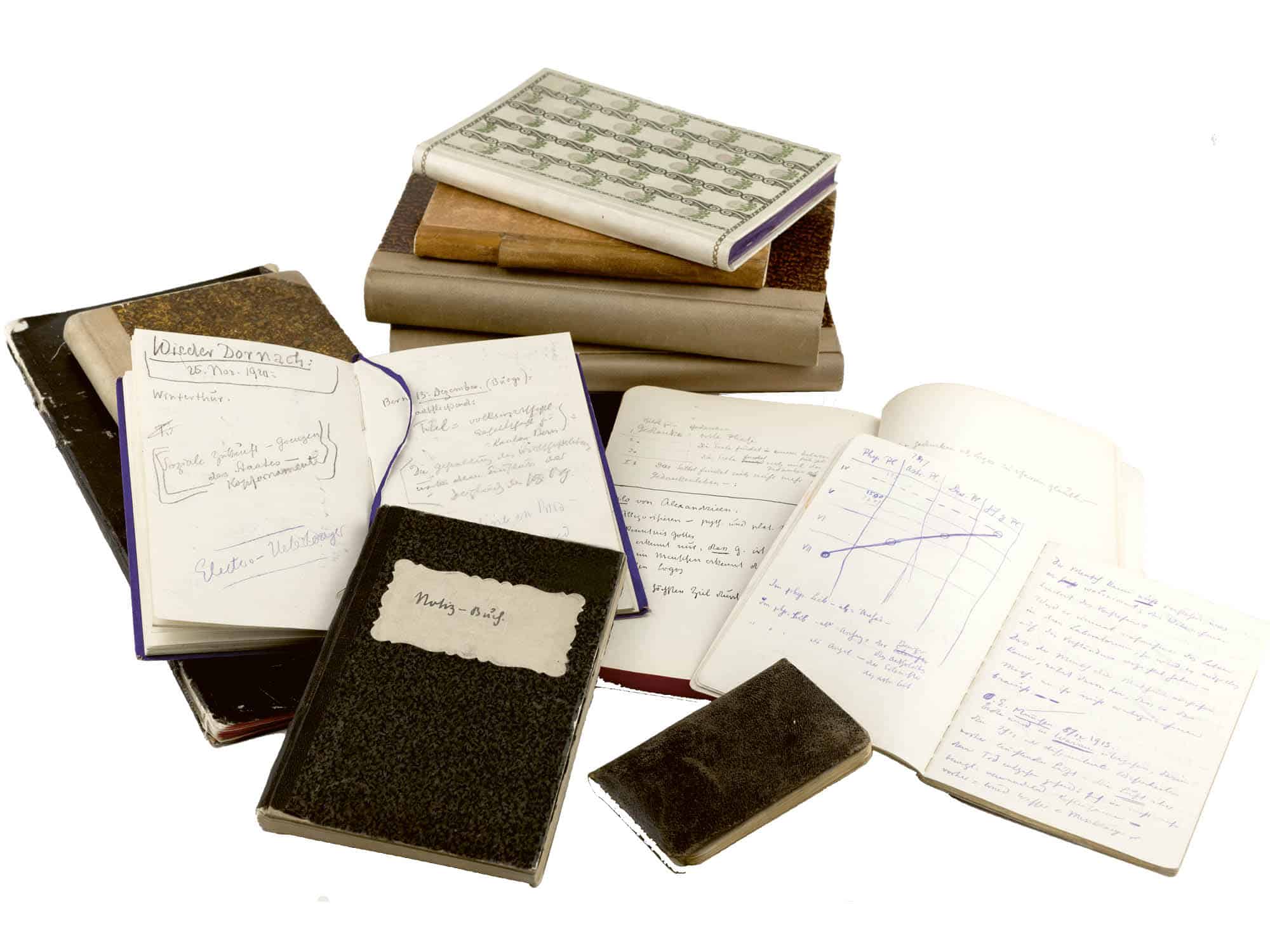
I have a custom of always writing down or formulating everything that comes to me from the spiritual world with a pen in my hand, either in words or in some kind of drawing. As a result, my notebooks number in the truckloads. – Rudolf Steiner The Rudolf Steiner Archive’s treasure trove of notes is not only made up of truckloads of small and large red, green, black, and purple notebooks but also thousands of individual papers, ranging from small…

Andrea Leubin und Andrea Leubin und Monika Philippi · 16 January 2025 · 7 min

Camus and Lusseyran: Thinkers of Light in the Resistance

Camus and Lusseyran: Thinkers of Light in the Resistance

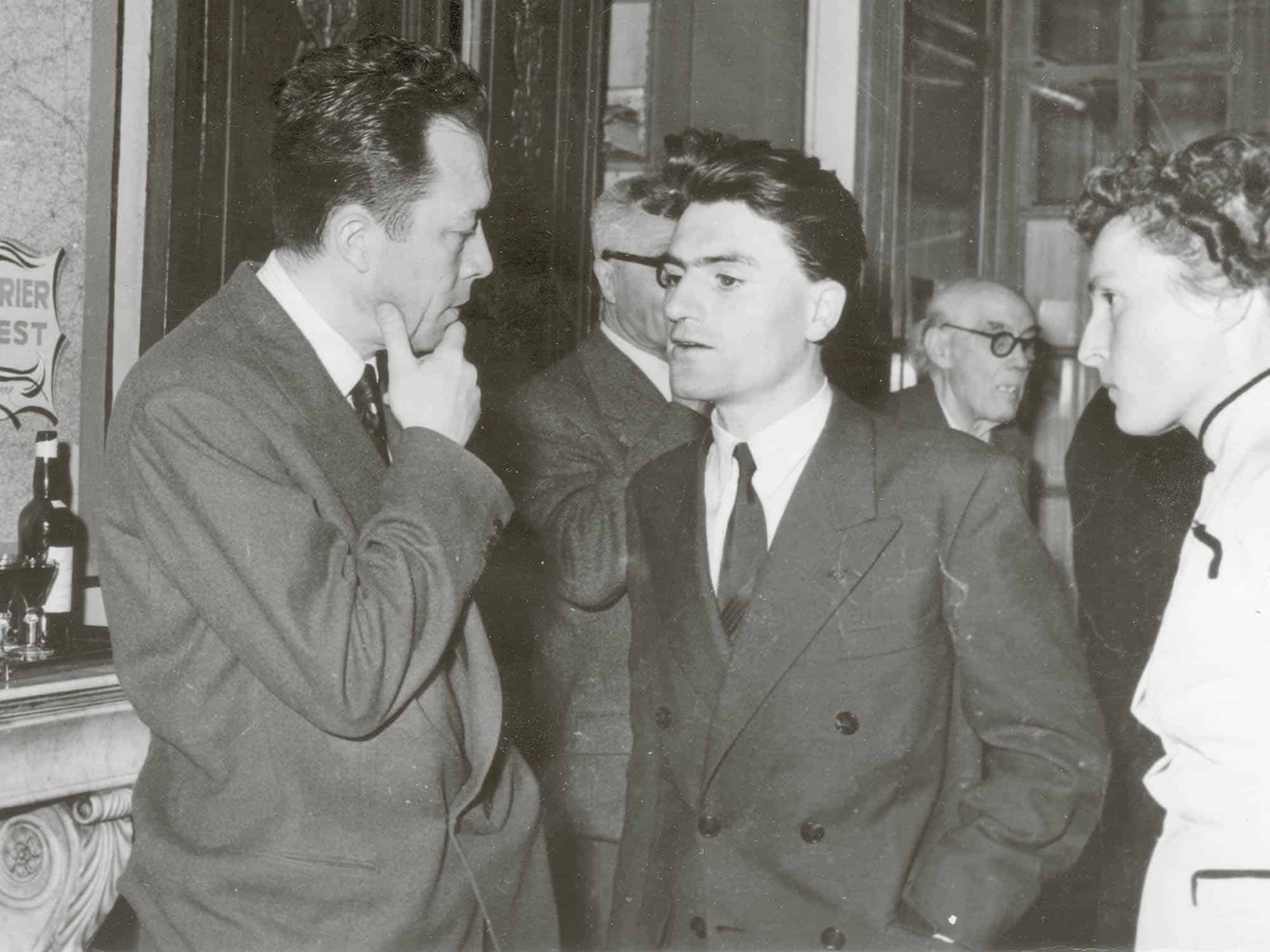
They were handsome, smoked a lot, loved women, nature, and light—and they resisted the Nazi occupation. Albert Camus and Jacques Lusseyran, whose meeting in 1953 was captured by a photographer, are united by their deep search for meaning in a dark world. A reading in dialogue. The same scene, eleven years apart, two cars: 1960—Albert Camus drives to meet three women with whom he’s arranged a date; 1971—Jacques Lusseyran travels with his third wife. . . . For unexplained reasons, Camus’s car veers…

Isabelle Dupin · 02 January 2025 · 12 min

Was Jacques Lusseyran an Anthroposophist? A Testimony

Was Jacques Lusseyran an Anthroposophist? A Testimony

Jacques Lusseyran (1924–1971) has been well-known in France since 2015. His work is now considered a classic of French literature. What connects Jacques Lusseyran to anthroposophy? He only began reading anthroposophical works, mainly by Rudolf Steiner, late in his short life. However, he came into contact with the substance of anthroposophy at an early age through his father. François Lusseyran, his half-brother, writes. First of all, I can personally testify that Jacques Lusseyran clearly realized one day that anthroposophy was…

François Lusseyran · 02 January 2025 · 11 min

We Need Lighthouses

We Need Lighthouses

In June 2024, there was a staged reading of Jacques Lusseyran’s Das wiedergefundene Licht [And There Was Light] with Richard Schnell, Fritz Nagel, and a sculpture by Barbara Schnetzler. One member of the audience, Aina Bergsma, left the six-hour program feeling “ge-ich-tet” [‘I’-ed] and offers her reflection. In a time where complexity constantly threatens to overwhelm our comprehension and repeatedly disorientates us, I long for light. Light, not as enlightenment from above, as divine input, nor light as illumination of…

Aina Bergsma · 02 January 2025 · 4 min

In the Studio of Jean, the Painter

In the Studio of Jean, the Painter

Jean appears, hand outstretched and a shining hat of light on his head—a special hat that perhaps only I can see. This thought does not console me. For Jean is entirely inside that hat, and his words fall out of it. It’s a very positive impression: this man does not speak only with his mouth and throat. In all his sentences, there are flashes of light that seem to come from somewhere else, from above—a precious rain that you want…

Jacques Lusseyran · 02 January 2025 · 2 min

The Reintegration of the Human Being into Cosmology

The Reintegration of the Human Being into Cosmology

For several centuries, scientific materialism neglected the experiential presuppositions of its own research activities, striving to achieve an outside, disembodied, “God’s eye view” of the universe. In their recent book, The Blind Spot, astrophysicist Adam Frank, theoretical physicist Marcelo Gleiser, and philosopher Evan Thompson offer a philosophical intervention into modern humanity’s techno-scientific civilization. The authors argue that our contemporary scientific culture has steered us off course due to its lack of appreciation for the ultimately irreducible, immeasurable, and incalculable realities…

Matthew Segall · 04 December 2024 · 7 min

Are We Living Under Technofeudalism?

Are We Living Under Technofeudalism?

Has Big Tech replaced capitalism with a new, even more exploitative system, “cloudalism”? That’s what former Greek finance minister Yanis Varoufakis claims in his book Technofeudalism: What Killed Capitalism. According to Varoufakis, the cloudalists—big tech companies such as Meta, Amazon, Apple, Alphabet, etc.—have amassed huge amounts of cloud capital that can no longer be defined by capitalist relations. Who are we in this system? How is it that the internet, which so many thought was a radical instrument of decentralization,…

David Auerbach · 20 November 2024 · 4 min

A Tale of Faith, Love, and Hope

A Tale of Faith, Love, and Hope

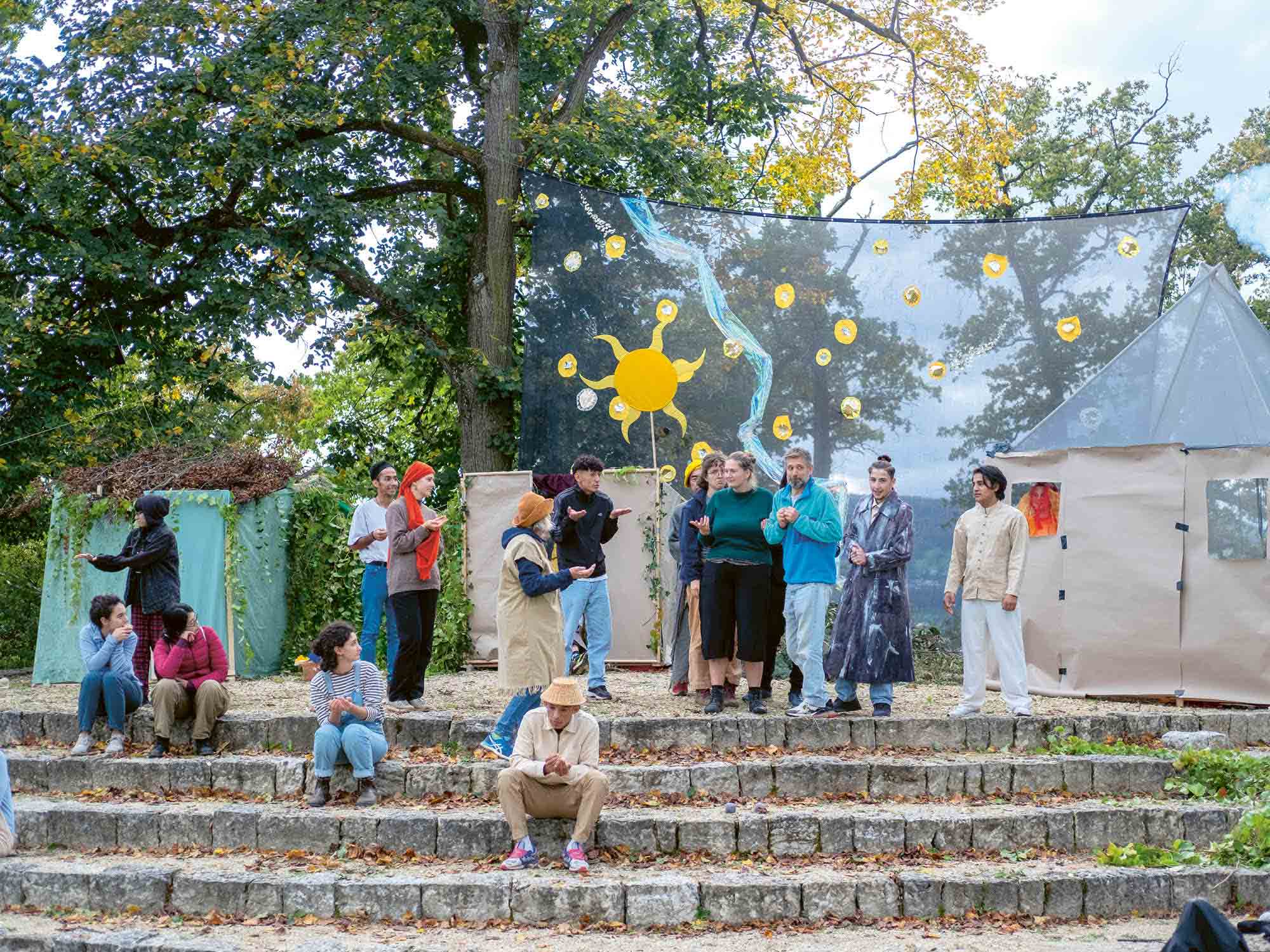
All that is good, beautiful, and true comes in threes—sweet, salty, and sour; heads, hands, and hearts; darkness, light, and color. And stories, so they say, do too. One—the Beginning: Setting the Stage Once upon a time, there was a village built on a long-forgotten sacred site, surrounded by a dark forest. Three brothers lived in the village, each with a unique task. The youngest brother, Faith, was wise and knowledgeable in the movements of the planets and stars. At…

Andrea de la Cruz Barral · 31 October 2024 · 14 min

Goethe’s Imaginative Journey to the Orient

Goethe’s Imaginative Journey to the Orient

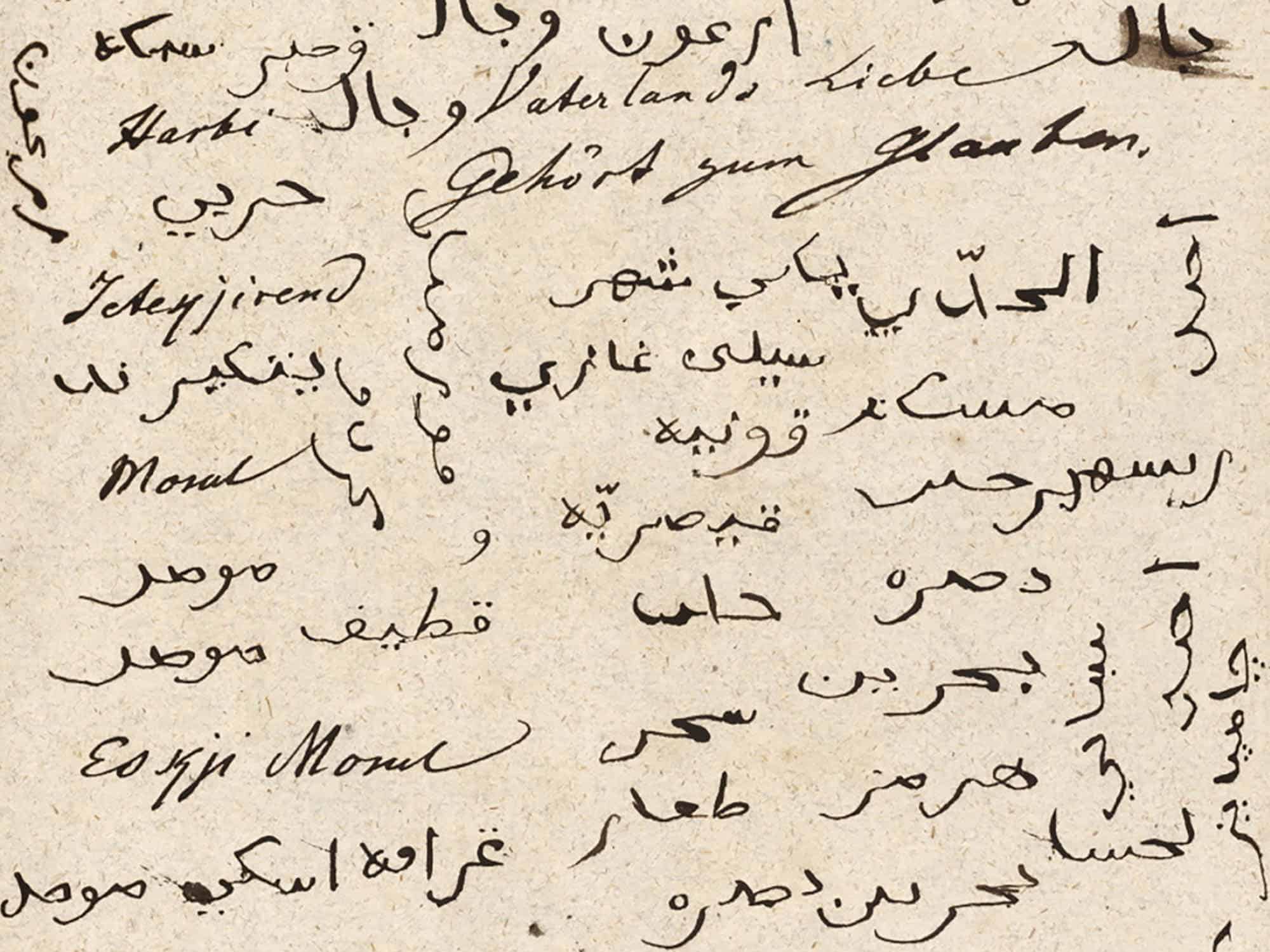
Goethe maintained a lifelong interest in foreign cultures, particularly in their literature. He engaged deeply with the “oriental,” Indian, Chinese, and ancient Iranian or Persian-Islamic cultures. Iris Hennigfeld One of the fundamental characteristics of Goethe’s work is that he is able to establish a fruitful and, in this sense, “true” relationship with his literary and scientific predecessors and contemporaries, primarily through his own productivity but sometimes even by means of the greatest opposition (as in the case of Carl von…

Iris Hennigfeld · 02 August 2024 · 18 min

The Blind Seer

The Blind Seer

Jacques Lusseyran lost his eyesight as a child, but he learned to see with his inner senses. As a resistance fighter in occupied Paris and a concentration camp prisoner in Buchenwald, he became a light for many during the darkest of times. To mark the 100th anniversary of his birthday, the Goetheanum stage held a reading from his work Das wiedergefundene Licht [And There Was Light] with Richard Schnell (reading), Fritz Nagel (music), and Barbara Schnetzler (sculpture). Philipp Tok: Why…

Richard Schnell · 14 June 2024 · 5 min

Poetic Language and Literary Imagination

Poetic Language and Literary Imagination

San Francisco/Toronto. Conferences on Spiritual Science in North America. In September, the Literary Arts and Humanities Section of the School of Spiritual Science in North America is organizing two connected gathering weekends entitled A Conference Devoted to Poetic Language & Literary Imagination. The US part will take place from September 7 to 8 in San Francisco, and the Canadian part will be held from September 13 to 15 in Toronto. In terms of content, the focus will be on a…

Paula Boslau · 07 June 2024 · 1 min