Section

Literature

← Literary Arts

95 articles

Pooled Knowledge for Understanding Us Human Beings

Pooled Knowledge for Understanding Us Human Beings

Michaela Glöckler wrote the introduction for the Critical Edition of Rudolf Steiner’s book Extending Practical Medicine: Fundamental Principles Based on the Science of the Spirit. Here she describes ten special features of this work. The anthroposophical spiritual science developed by Rudolf Steiner over a period of forty years hasn’t just inspired researchers, artists, and those committed to the betterment of society. Already during his lifetime, his work provoked fierce controversy and massive opposition. Christian Clement, editor of the Rudolf Steiner…

Michaela Glöckler · 29 August 2025 · 7 min

The Aura of Cookbooks

The Aura of Cookbooks

Over on a somewhat isolated shelf in my family’s kitchen, you’ll find the cookbooks. They don’t get much attention, except for one whose cover has long since been lost and whose grease and flour stains bear witness to frequent use, especially on the page that explains how to braid a loaf of bread. It’s the “Fülscher Cookbook.” Elisabeth Fülscher’s 100-year-old definitive work on Swiss cuisine contains 1,700 recipes, and throughout its numerous editions, it has managed to combine this traditional…

Wolfgang Held · 29 August 2025 · 1 min

Anthroposophy, Multilingual

Anthroposophy, Multilingual

Cambridge, Massachusetts. The translation of Rudolf Steiner’s texts from German into other languages plays a crucial role in the global networking of the anthroposophical movement and in its research. Thoughts by Henry Holland, translator and co-organizer of the “100 Years of Rudolf Steiner” conference at Harvard University. Ever since the first consecutive lecture translations in London in 1902, translations of Steiner’s writings and lectures into scores of languages have been indispensable in spreading what was originally a tiny movement to…

Henry Holland · 12 June 2025 · 2 min

The Pentagonal Dodecahedron and the Human Form

The Pentagonal Dodecahedron and the Human Form

The blurb on the cover of Hartmut Endlich’s book Das Pentagon-Dodekaeder als strukturgebendes Maß des Menschen [The pentagonal dodecahedron as a structural measure of the human being] promises a lot. Does it deliver? The visuals alone might make it worthwhile for those who don’t speak German. The book begins with Leonardo da Vinci’s world-famous image of the human being standing in a square and a circle. The author, an anthroposophical physician, then goes on to discuss today’s fragmented natural science,…

Luzia Birgit Gisler · 03 June 2025 · 4 min

From Effects to Essence and Back Again

From Effects to Essence and Back Again

Goethe developed a new method for studying nature, both inorganic and organic. His intention was to uncover the natural law—the essence, the being, the idea—of a thing by introducing a special way of beholding the phenomena—the manifestations of the thing—in order to gain knowledge and insight. This approach was not being pursued by the conventional, supposedly “objective,” sciences of his time, and it was not possible for anyone holding on to a pre-scientific, naive view of the world. Goethe’s approach…

Iris Hennigfeld · 27 May 2025 · 16 min

Exploring the Continent

Exploring the Continent

Martina Maria Sam has written seven books on Rudolf Steiner, his art, and his language. Wolfgang Held invited her for a conversation about her research. Wolfgang Held: Which book brought you closest to Rudolf Steiner? Martina Maria Sam Each book is a different exploration of the Rudolf Steiner continent. I’m always discovering new and interesting aspects. But I could say my experiences with three projects in particular have been the most profound: First, working through his personal library over many years—this…

Martina Maria Sam · 26 March 2025 · 5 min

The River Flows on Within Me

The River Flows on Within Me

David Marc Hoffmann, director of the Rudolf Steiner Archive (until his upcoming retirement), wrote a biography of Rudolf Steiner, tracing his life and work in eight stages. Wolfgang Held met with him for an interview. Wolfgang Held: Before we come to Rudolf Steiner, I have two questions about your own biography. Your focus was on German studies and history, but you also studied museology, the study of museums. I’d never even heard of that as a degree program. David Marc…

David Marc Hoffmann · 26 March 2025 · 14 min

“Where Is Rudolf Steiner—Now?”

“Where Is Rudolf Steiner—Now?”

Andreas Laudert has written a biography of Rudolf Steiner, Unter den Augen des Himmels [Under the eyes of heaven]. He explores the play between closeness and distance, “being here and now” and “journeying to those before and elsewhere”; he seeks pathways to the heavens. Wolfgang Held sat with him for an interview. Wolfgang Held: Why did you decide to write a biography of Rudolf Steiner? Andreas Laudert I was commissioned to do it. I probably wouldn’t have done it on my…

Andreas Laudert · 26 March 2025 · 8 min

The Soul in Arabic

The Soul in Arabic

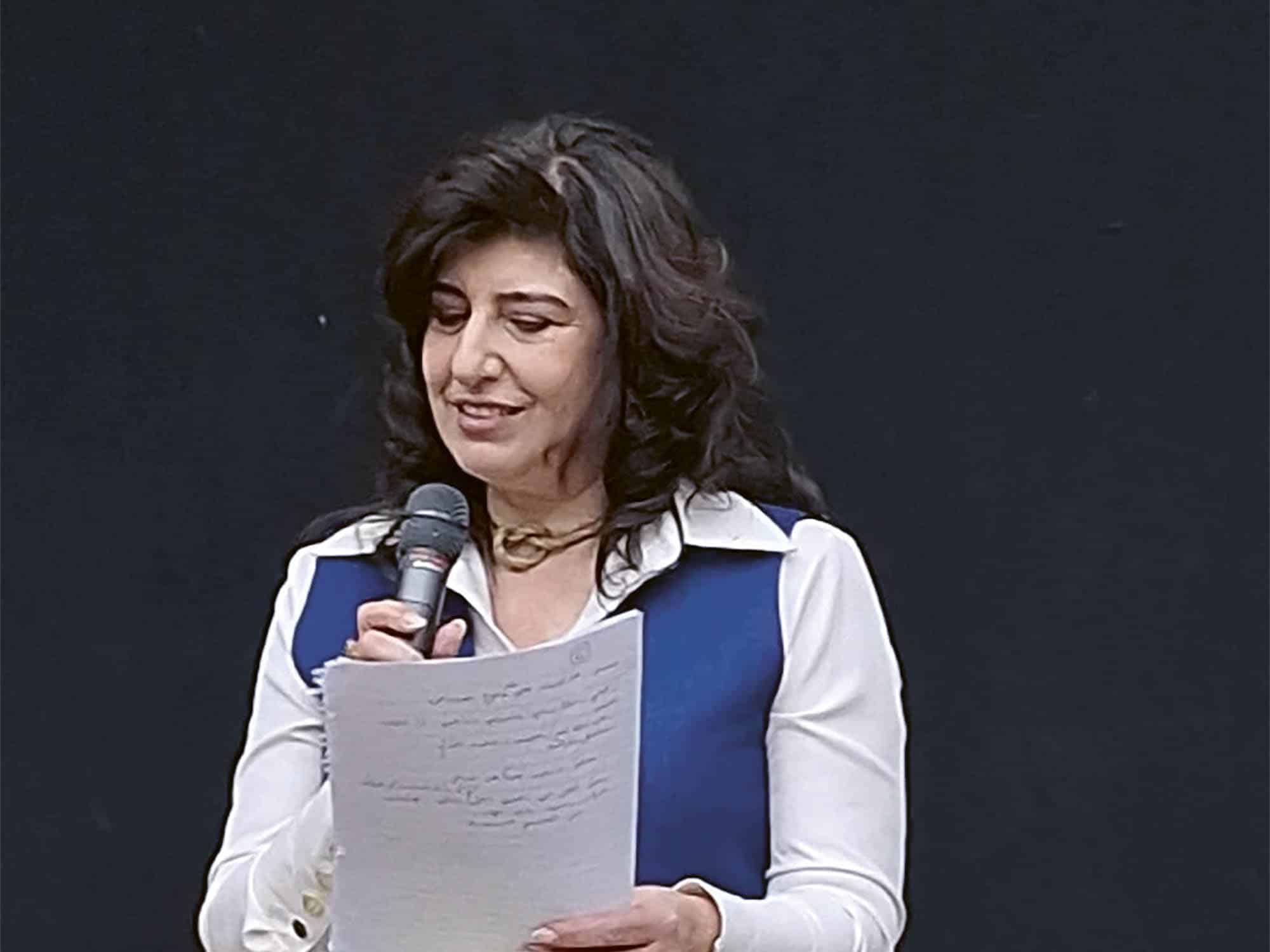
Shefar’am, Israel. Lana Bahum-Nasrallah, a Waldorf teacher with an Arabic-Christian background, has translated Rudolf Steiner’s Calendar of the Soul into Arabic. An account of an 18-year journey. Shefar’am is a town in the north of Israel. It is spread out between the lower Galilean hills overlooking the Bay of Haifa, Acre, and the Mediterranean Sea. Muslims, Christians, and Druze live together in Shefar’am. This is where the first Arab Waldorf initiative in Israel began: an Arabic-language Waldorf kindergarten founded in…

Gil’ad Allon · 18 March 2025 · 2 min

Christianity as Mystical Fact

Christianity as Mystical Fact

In Jesus, the Logos itself has become a person. This book is not the first where Rudolf Steiner “became openly completely esoteric.” He’d already taken this step by writing on Goethe’s “Fairy Tale” in his Maga Would you like to keep reading? We’re pleased to present our Summer 2026 offer, valid until August 8: three months of free access – cancel anytime. If you’re already a subscriber, please log in here to continue reading.

Jaap Sijmons · 14 March 2025 · 7 min

Everything in the World Is Conscious

Everything in the World Is Conscious

Many years ago, I was talking to the wife of a colleague in the stairwell of the Rudolf Steiner House in Stuttgart. Something must have upset me because I was talking very enthusiastically and stuck my right hand out, pointing my finger at the woman listening. As the conversation went on, I became aware of my gesture, which I hadn’t consciously noticed before. The woman I was with had noticed it, and it was clear that I had then noticed…

Anna-Katharina Dehmelt · 14 March 2025 · 5 min

What Is Feeling?

What Is Feeling?

In The Philosophy of Spiritual Activity, Rudolf Steiner frequently refers to feeling as a soul event. In Chapter 3, he starts by sharply distinguishing feeling from active thinking, which cannot be observed while it is occurring. He says that feeling is observable, along with certain other soul activities (having thoughts or mental pictures, wishes, and cravings). Again, in contrast to active thinking, which is universal, feeling is attributed to the individual personality. Active thinking takes on a personal and individ…

Renatus Ziegler · 14 March 2025 · 4 min