Section

Natural Sciences

← Nature

82 articles

Does the Cosmos Resonate—or Not?

Does the Cosmos Resonate—or Not?

Why the most harmonious universe could also be the most unstable—and why cosmic order seems to favor irrationality. Human beings have always admired the cosmos for its elegance. From the graceful orbits of the planets to the silent symmetry of the spiral galaxies, the night sky radiates harmony. For centuries, philosophers, scientists, and mystics alike have tried to reduce this harmony to something concrete: a note, a number, a formula. Two such numbers, the octave and the golden section, have…

David Auerbach · 17 September 2025 · 4 min

Light Is Consciousness

Light Is Consciousness

In the Goetheanum Weekly 2/2025, Martin Rozumek and Hans-Christian Zehnter developed their view of how sensory phenomena invite us to read them as a Book of Nature. The central question was: What is “matter” from a spiritual scientific perspective? Now, they turn their attention to light and develop guidelines for observing it in accordance with its nature. We love light: sunshine, beautiful weather. The rising of the light, whether in the morning or in spring, fills us with gratitude and…

Hans-Christian Zehnter · 03 September 2025 · 18 min

The Common Structure of the Brain and the Cosmos

The Common Structure of the Brain and the Cosmos

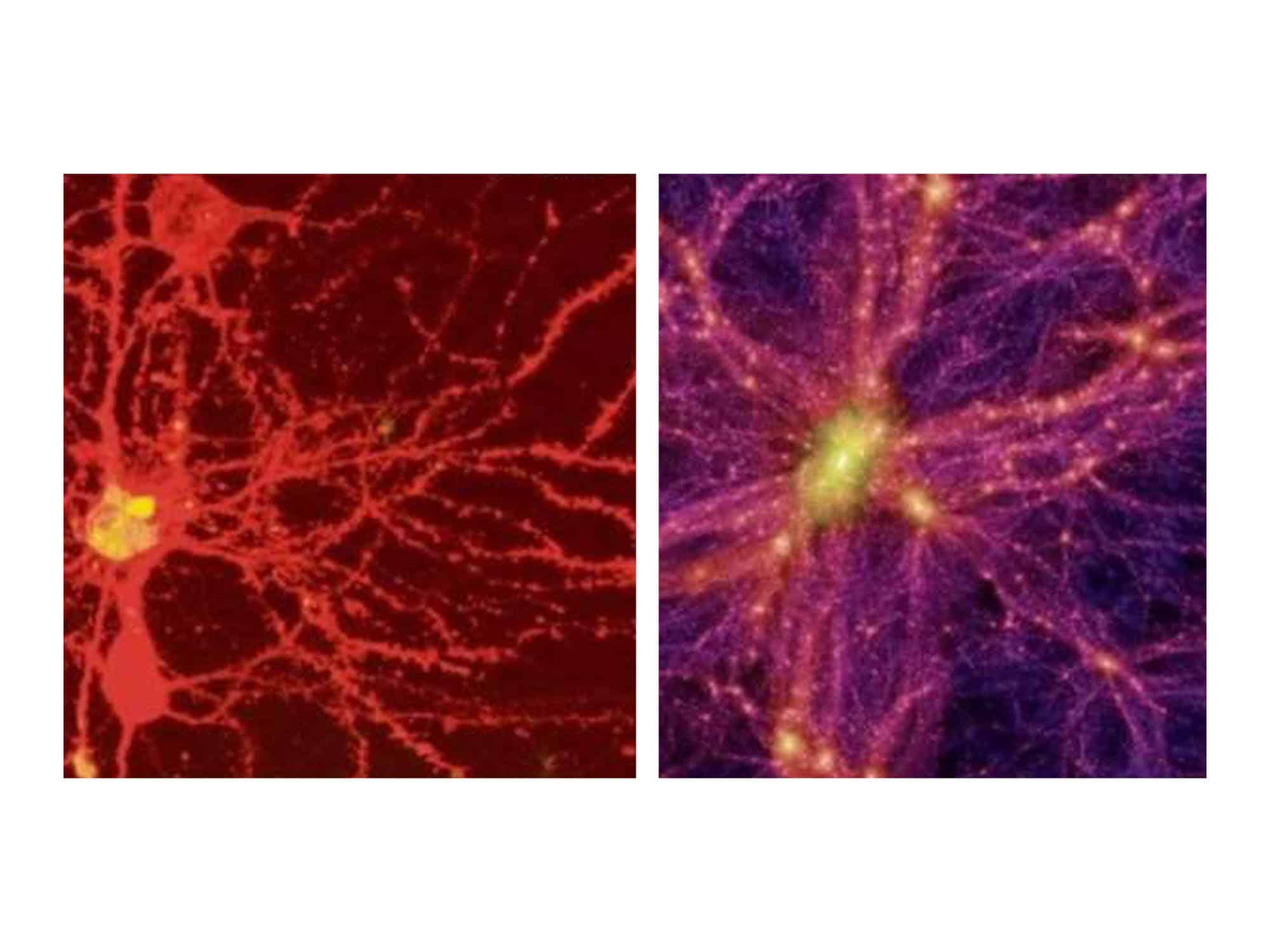
In February 2025, a remarkable study was published in the renowned journal Nature Astronomy (Glavin et al. 2025). During its seven-year mission, NASA’s OSIRIS-REx spacecraft collected cosmic rock samples from Bennu, a 500-meter-wide asteroid in near-Earth orbit. The samples were returned to Earth in a sealed capsule to prevent any terrestrial contamination. In addition to numerous amino acids and other organic compounds, the rock samples from Bennu also contained all the nucleic bases (adenine, guanine, cytosine, thymine, and uracil) that…

Thomas Hardtmuth · 13 August 2025 · 5 min

From Effects to Essence and Back Again

From Effects to Essence and Back Again

Goethe developed a new method for studying nature, both inorganic and organic. His intention was to uncover the natural law—the essence, the being, the idea—of a thing by introducing a special way of beholding the phenomena—the manifestations of the thing—in order to gain knowledge and insight. This approach was not being pursued by the conventional, supposedly “objective,” sciences of his time, and it was not possible for anyone holding on to a pre-scientific, naive view of the world. Goethe’s approach…

Iris Hennigfeld · 27 May 2025 · 16 min

Life after Death from a Scientific Point of View

Life after Death from a Scientific Point of View

One hundred years ago, only a small percentage of the population believed in an afterlife; today, that number has risen to around one-third. Academic science does not support this belief—or does it? Many people today who followed the usual path through school believe that humans are biological beings and that the existence of their ‘I’ begins and ends with the birth and death of the body. And yet, there’s actually no empirical evidence to support this belief. Research related to…

Ulrich Weger and Jonas Raggatz und Ulrich Weger · 09 April 2025 · 13 min

The Solar Nature of Life

The Solar Nature of Life

Is the earth just a collection of lifeless matter—a solid rock floating in the vast cosmic void? Is life just an accident—an anomaly in a mechanical universe? A materialistic view hypothesizes about “abiogenesis”: how life could have emerged from a mechanical and dead world. It places the lifeless at the beginning. But what if it is the other way around? What if life is at the beginning? “In all geological periods, there have never been and still are no traces…

Louis Defèche · 18 March 2025 · 1 min

Matter Is Relationship

Matter Is Relationship

Cognition is a function of temperament. First, you seek in all directions—you need sanguinity, air. Phlegmatism, fluid, gives you perseverance, and cholericness, fire, helps you overcome resistance. Melancholy, earth, follows like an echo of knowledge. It directs your gaze into the depths and gives you humility—you recognize what you still don’t know and what new questions await you behind the answers. Maybe this is how quantum physicist Werner Heisenberg felt when he wondered at the end of his book Physics…

Wolfgang Held · 13 February 2025 · 1 min

The Reintegration of the Human Being into Cosmology

The Reintegration of the Human Being into Cosmology

For several centuries, scientific materialism neglected the experiential presuppositions of its own research activities, striving to achieve an outside, disembodied, “God’s eye view” of the universe. In their recent book, The Blind Spot, astrophysicist Adam Frank, theoretical physicist Marcelo Gleiser, and philosopher Evan Thompson offer a philosophical intervention into modern humanity’s techno-scientific civilization. The authors argue that our contemporary scientific culture has steered us off course due to its lack of appreciation for the ultimately irreducible, immeasurable, and incalculable realities…

Matthew Segall · 04 December 2024 · 7 min

The Future Begins in Our Encounters

The Future Begins in Our Encounters

Johannes Kronenberg has been researching and working on sustainable development and its spiritual and anthroposophical dimensions for seven years. Now, he’s establishing a field of work for this within the Section for Agriculture. Wolfgang Held joined him for a conversation. Wolfgang Held: What does sustainability mean? Johannes Kronenberg: Sustainability or sustainable development is a young discipline that has been institutionalized worldwide over the last forty to fifty years. Initially, it meant using “resources” in a way that preserves their natural,…

Johannes Kronenberg · 20 November 2024 · 11 min

100 Years of Picture-Forming Methods: Anthro-Niche or Influence?

100 Years of Picture-Forming Methods: Anthro-Niche or Influence?

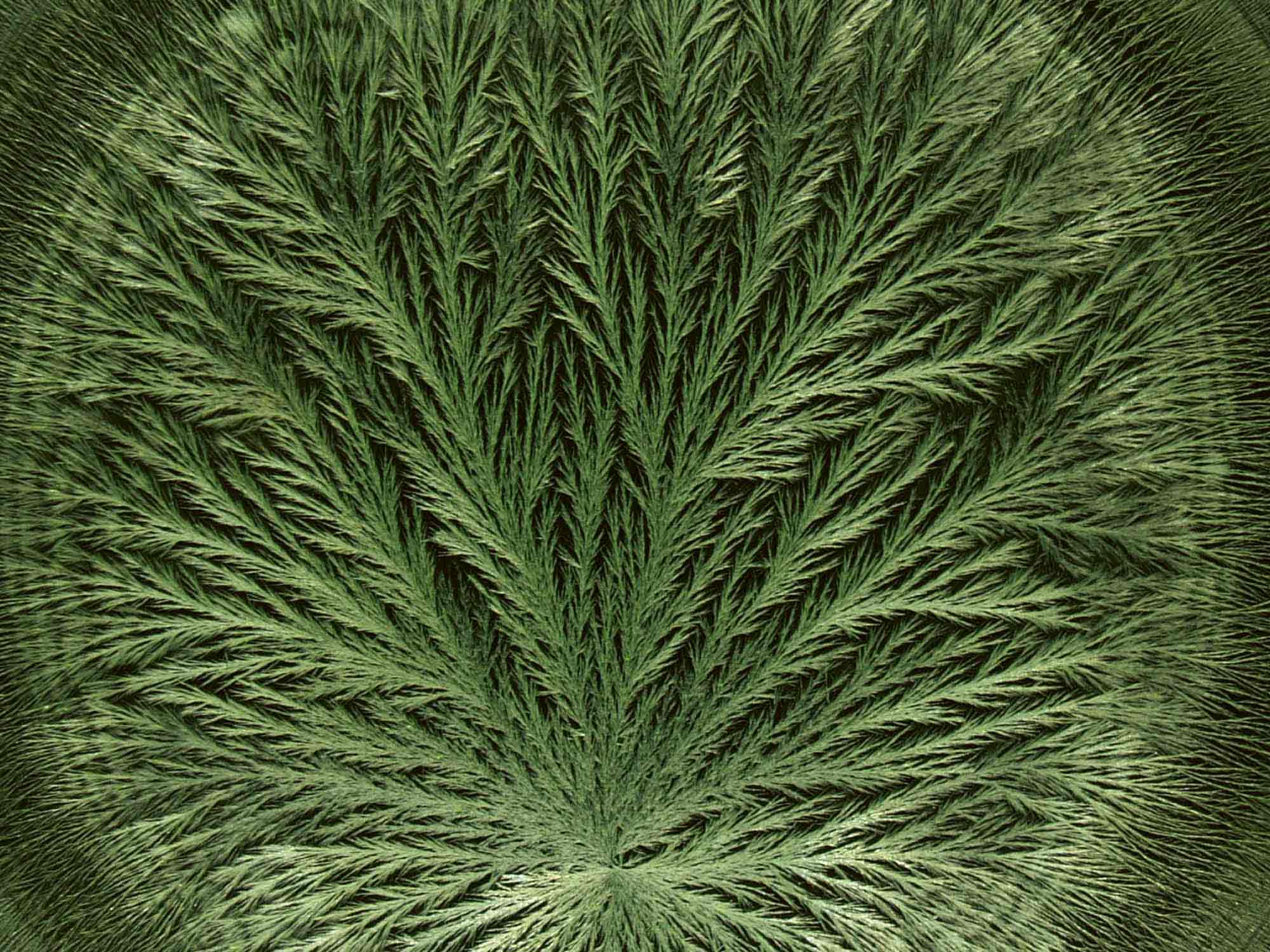
Picture-forming methods like copper chloride crystallization, capillary dynamolysis, and round picture chromatography are now entering the era of computerized image analysis. Is this an opportunity to shape human spiritual evolution? In our PhD work at the Society for Cancer Research, we use picture-forming analysis—a complementary research approach for quality investigation. There are several methods, but all of them create images with patterns and shapes that can be evaluated and analyzed to provide information about the quality of the tested sample.…

Paul Doesburg and Greta Guglielmetti · 13 November 2024 · 7 min

Pathways to a Sun-led Science

Pathways to a Sun-led Science

The more diverse a meadow is, the more stable its identity. That makes sense to us. But what shapes our identity as human beings, and what role does diversity play? A Goethean scientific approach offers a deeper understanding of this. Insights from the Natural Science Section’s Evolving Science 2024 conference. The air is invigorating and filled with that wonderful smell of fallen oak leaves crunching underfoot. As I climb the hill to the Goetheanum, all around me, greens are diversifying…

Laura Liska · 05 November 2024 · 13 min

Sympoiesis: From Thinking About to Being With

Sympoiesis: From Thinking About to Being With

Separate entities can either compete or develop strategies to cooperate. In either case, the starting point is separation. This is a foundational assumption of modern biology. But what if relatedness is more fundamental? How would we behold living beings and what we call their environment? When you go out into nature and see an oak, that tree is not something isolated in the world. It’s something that grows up out of the earth and is connected with the Earth. Yet,…

Craig Holdrege · 05 November 2024 · 10 min