Section

Natural Sciences

← Nature

82 articles

Researching the Effects of Biodynamic Preparations

Researching the Effects of Biodynamic Preparations

The next online seminar of the International Biodynamic Research Platform will be held on 16 November on the topic “Scientific Proof of the Biodynamic Preparation Effects—What is the State of Knowledge?” During the session, there will be an opportunity to share experiences in researching the effects of the preparations with other researchers from around the world. This exchange will follow presentations by experienced researchers who will share their latest work in the field. Meike Oltmanns and Dr. Christopher Brock will…

Redaktion · 03 November 2023 · 1 min

Inner Climate Change

Inner Climate Change

Climate chaos is apparent in more and more parts of the world today, but our disconnection from nature reveals itself in other ways as well. In these excerpts from her recent book, Inner Climate Change, Selma Lea Bach encourages us to contemplate the connections between our external and internal environments and how inner change must be a part of our response to the collective crisis. Selma Lea Bach When we talk about global climate change, we also need to address…

Selma Lea Bach · 28 September 2023 · 5 min

Time From the Heart

Time From the Heart

New research shows that our moment-to-moment experience of the passage of time—particularly, what we might call “the present”—is not constant but stretches or shrinks even within each heartbeat. It’s a truism that time feels shrunk or stretched depending on circumstances. “When you sit with a nice girl for two hours you think it’s only a minute, but when you sit on a hot stove for a minute, you think it’s two hours,” said Albert Einstein, rather impishly. We experience that…

David Auerbach · 01 September 2023 · 4 min

Ways Out of Polarization

Ways Out of Polarization

“I can – whilst facing thee – but weep – and cry –.” These are words spoken by Strader, the natural scientist, to Ahriman at the moment in Rudolf Steiner’s third mystery drama when Strader realizes that this being is trapped within the limits of calculating intellectual thinking. But the words could just as easily be addressed to a Minister of the Environment who decides to import coal from Bolivia because Germany has decided to phase out coal production to…

Matthias Rang · 21 July 2023 · 13 min

Intuition in Science, Pt. 4

Intuition in Science, Pt. 4

Intellectual materialism denies intuition and its connection to spirit, but by asking questions of “why” rather than just “what” or “how”, we can start to spiritualize science. The final part of a four-part series. Here are the links to parts one, two, and three. The Threshold that Keeps the Spirit Hidden from the Intellect It betrays the entire mood of our present scientific paradigm to turn to intuition and bring the spirit directly into our questions about the natural world.…

Matthew Kenyon · 14 July 2023 · 9 min

Intuition in Science, Part 3

Intuition in Science, Part 3

The third of this four-part series further explores a resolution to the paradox of intellectual materialism. It leads to a conclusion that challenges certain tenets of modern science today: atoms and DNA do not form the foundation of the universe and life—spirit is the foundation. Intellectual materialism hides the gateway to the spiritual world for modern people, whether they know it or not. Here are links to parts one and two. Thinking is not merely a subjective process. This conclusion addresses…

Matthew Kenyon · 07 July 2023 · 8 min

What Do I Mean by Life?

What Do I Mean by Life?

When, in 1924, student Rudolf Hauschka asked Rudolf Steiner his most important question, “Doctor, what is life?”, he did not get a defining answer but a task: “Study rhythms—rhythm carries life.” Steiner’s lecture series Geisteswissenschaftliche Menschenkunde (Spiritual-Scientific Anthropology/Knowledge of Man, GA 107), contains essential information on this subject, especially in the lectures of December 21, 1908 and January 12, 1909. This became the impetus for lifelong research on rhythms by medical doctor and occupational physiologist Gunther Hildebrandt (1924-1999) in Marburg.…

Wolfgang Schad · 07 July 2023 · 1 min

Intuition in Science, Pt. 2

Intuition in Science, Pt. 2

Modern science has taken on such a stature that it is rare to seriously question its fundamental assumptions. Here, Matthew Kenyon, a senior technologist at NASA‘s Jet Propulsion Laboratory and longtime student of anthroposophy, explicates the core, untenable paradox of modern science: that it doesn’t understand its primary tool, thought. This is part two of a four part essay. Part one can be found here. Redrawing the Boundary Around Knowledge to Find the Paradox in Modern Science The modern attitude toward…

Matthew Kenyon · 02 June 2023 · 9 min

Intuition in Science, Pt. 1

Intuition in Science, Pt. 1

Children love to play the game of asking «Why?» without end. Perhaps this is the beginning of the scientific mind. Certain questions have ceased to be asked, though, because they no longer fit within the framework of contemporary science or philosophy. In the first part of this multi-part essay, Matthew Kenyon, a senior technologist at NASA’s Jet Propulsion Laboratory and longtime student of Anthroposophy, traces the history of philosophy that has led to the way the scientific community asks its…

Matthew Kenyon · 12 May 2023 · 13 min

The Self-Metamorphosis of the Researcher

The Self-Metamorphosis of the Researcher

Self-education is a recurring theme in Goethe’s work, for example in his Bildungsromane and plays. However, this dimension of inner development is less known in the context of his scientific research. Iris Henningfeld shares her research in this field here and gives an inspiring insight into the connection between self-development and the process of cognition in Goethe’s sense. It is an approach to cognition that encourages rootedness in the earthly world and sensory experience, but at the same time also…

Iris Hennigfeld · 27 April 2023 · 17 min

Intelligence Without a Brain

Intelligence Without a Brain

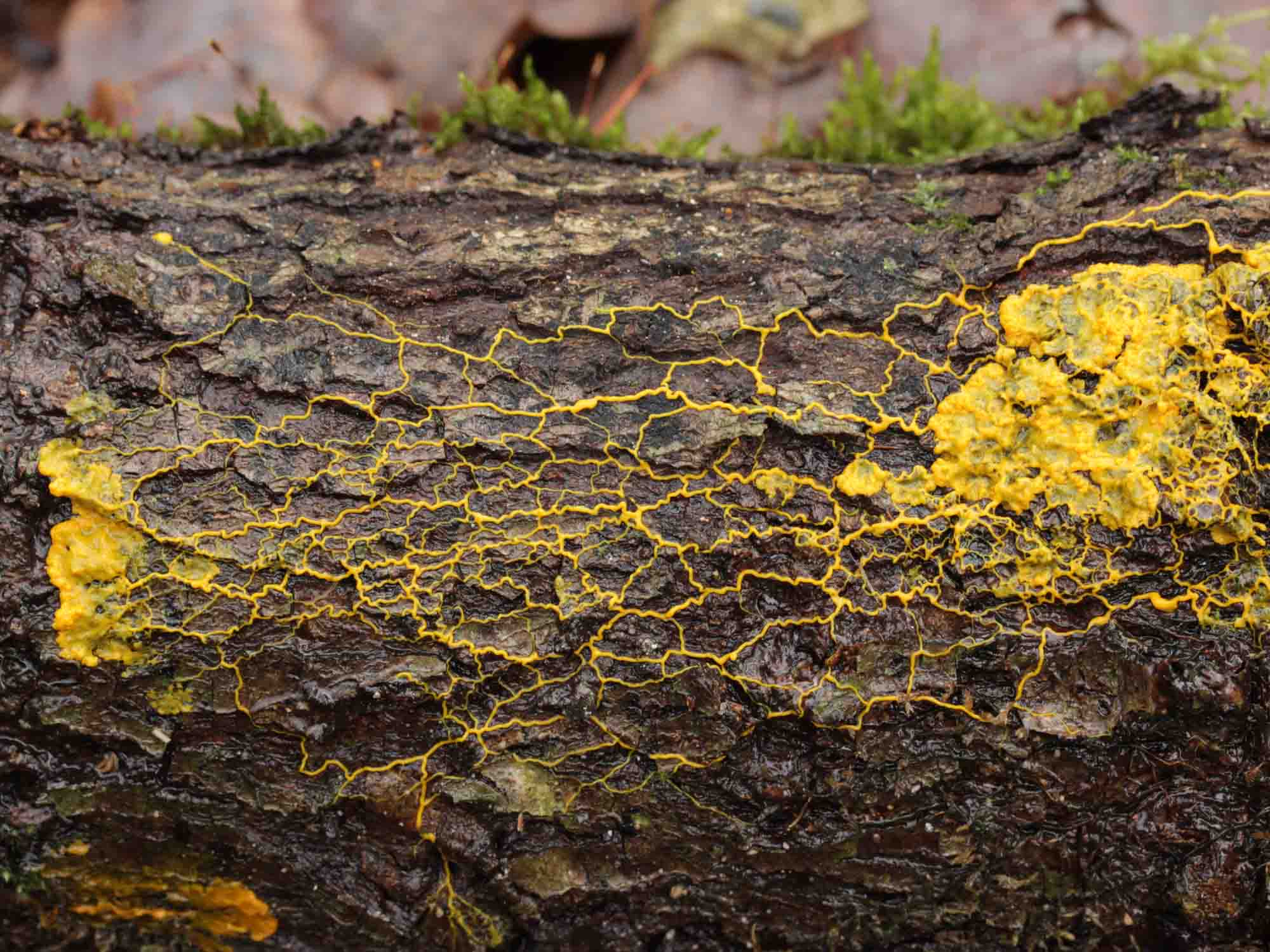
What is bright yellow, eats oats as its favourite food, does not like coffee, learns without a brain – even composes music , feels without nerves, moves without legs, heals itself, has 719 sexual partners with whom it can mate , can share its knowledge with others of its kind, and yet is neither a plant nor an animal nor a fungus? What recently even serves as a power source for a wristwatch with a heart rhythm monito Would you…

David Auerbach · 30 March 2023 · 5 min

One Health

One Health

The fact that all living beings, from humans to single-celled organisms, share not only the earth but also its life and health lies at the heart of the idea of ‘One Health.’ Over three days, almost 100 interested people met for the Medical Section’s research conference. Studying and addressing life – this was the subheading of this year’s meeting of the Medical Section. Georg Soldner from the Goetheanum and Erik W Baars from the Louis Bolk Institute and professor at…

Wolfgang Held · 16 March 2023 · 13 min